
Review · WALL STREET TOURS
How Money Was Made Wall Street Walking Tour
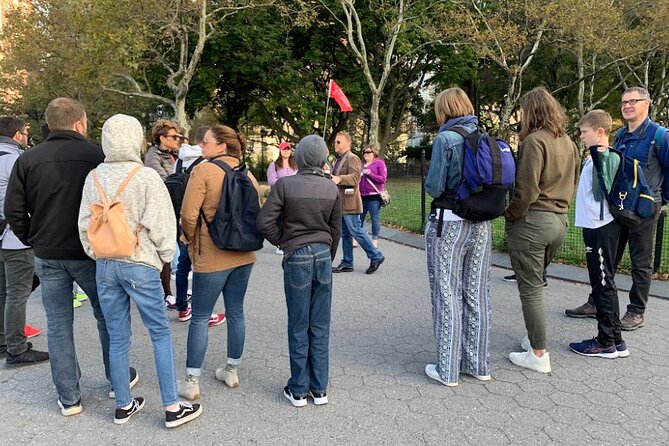
Money moves, even when you’re just walking. This short Wall Street tour turns familiar landmarks into a clear story about how the financial system took shape in New York. You’ll move at an easy pace for about two hours, with a licensed guide guiding the flow and making the architecture and institutions actually mean something.
I especially like the human angle the guide brings, including legal and finance perspectives you do not usually get on standard sightseeing walks. I also like the practical format, no headset handoffs, so you can hear the guide clearly and ask questions without fuss.
One consideration: much of what you see is exterior-only, including the New York Stock Exchange area, so if you’re hoping for lots of inside access, this is not that kind of tour.
Key highlights worth your time
- Small-group feel with a max of 30 travelers, so questions and side explanations stay possible
- No forced headphones, which keeps listening natural and makes it easier to follow street-level stories
- Hamilton-focused connections between trade, government buildings, and the rise of finance
- Battery Park stops that explain why the shore mattered for defense and immigration
- Street-level viewing of Wall Street institutions, with NYSE seen from outside (no entry)
A 2-hour money story that fits your NYC day
This tour is built for people who want the Wall Street plot without sacrificing the rest of the city. At about two hours, it slots neatly between museums, lunch plans, and other timed sights.
The pace also helps you connect dots. You’re not just standing in front of famous buildings, you’re walking through a timeline, starting near historic custom and trade facilities, then moving toward parks, forts, and the financial core.
English is the working language, and you get a mobile ticket, so it’s easy to show up and get moving.
You can also read our reviews of more walking tours in New York City


Your walk begins at Bowling Green, the start of the New York money map
The meeting point is at 1 Bowling Green, New York, NY 10004, and the tour ends at Trinity Church at 89 Broadway. That arc matters because it mirrors how power and commerce have shifted around lower Manhattan.
Bowling Green is NYC’s oldest park, and the tour uses that fact to reset your mental map of the area. You’ll learn that the Dutch called the region the Plain and used it for practical life, not just pageantry, including parade grounds, meeting space, and even a cattle market. That kind of detail is a fast way to stop seeing Wall Street as a sealed-off world.
From there, the walk continues toward Battery Park, which becomes the bridge between early city survival and later financial growth. If you like tours that turn geography into explanation, you’ll appreciate how this one keeps returning to why each spot mattered.
Alexander Hamilton Custom House: trade, art, and why 1907 still matters
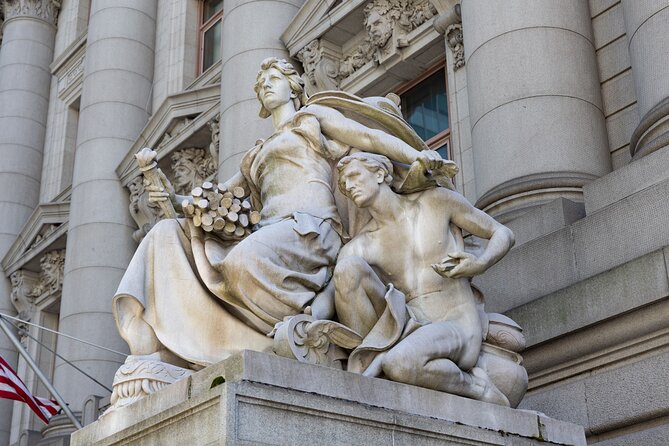
One of the strongest stops happens near the Alexander Hamilton Custom House. You’ll spend around 10 minutes with an exterior look at the building, which is described as a Beaux-Arts treasure and a monument to the rise of trade and commerce in NYC.
This is where the tour’s theme clicks: modern finance did not appear out of nowhere. It grew from shipping, imports, regulation, and the government infrastructure that made commerce possible. The Custom House fits that story perfectly because it was built as part of the machinery of trade.
There’s also a connection to the nearby National Museum of the American Indian, with the stop framed around the building area and how the museum space ties into Native American representation. Admission to any museum interiors is not included for this stop, and you’re visiting outside.
Bowling Green and Battery Park: parks with jobs, not just views
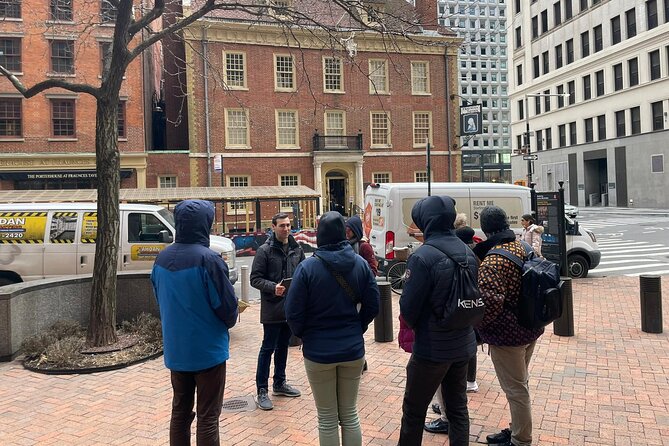
Bowling Green is your opening lesson in how public space supported everyday life. The tour treats the park like a living switchboard, showing how early New York used open ground for events, meetings, and livestock. It’s a reminder that finance grows from communities, not just from money.
Then you move to Battery Park, where the story shifts to the shoreline. You’ll get about 15 minutes here, with the tour explaining that for over 200 years, Battery Park served major roles in recreation, defense, and immigration for the city. That mix is important, because it’s one of the ways New York’s economic engine became crowded, connected, and international.
Battery Park also includes a specific feature in the tour package: the Netherland Monument. Even if you’ve walked through Battery Park before, having a guide point out why it belongs in the money-making story can change how you see the space.
Charging Bull as a symbol, not just a photo stop

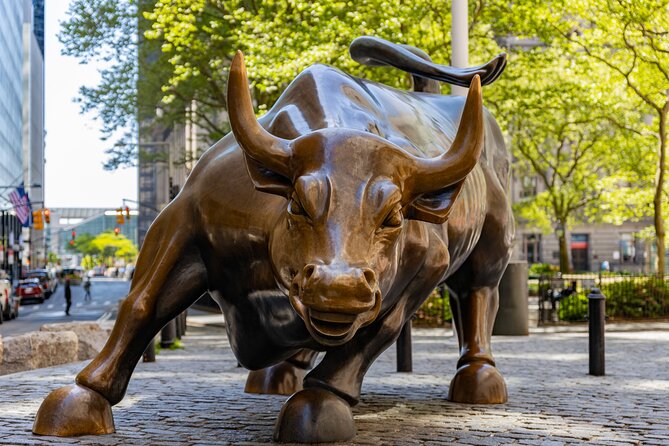
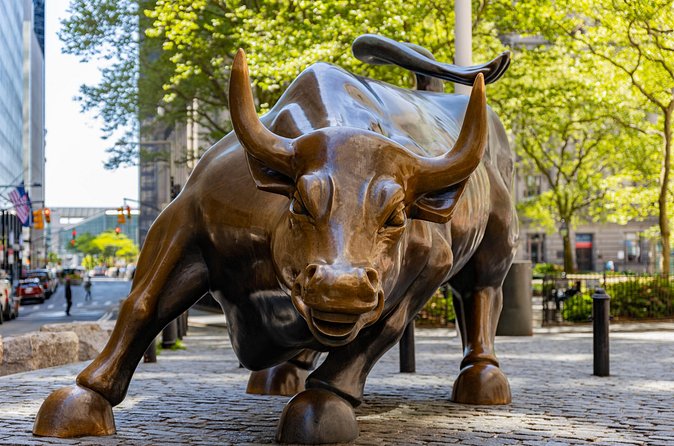
Yes, Charging Bull is famous. But on this tour it’s not just a place to snap a picture. The guide frames it as a symbol of the strength, resilience, and enduring power of Wall Street.
That interpretation is useful because it helps you read the district’s symbols in context. Wall Street branding, statues, and dramatic facades did not start as art for tourists. They became shorthand for collective beliefs, risk-taking, and the idea that markets survive tough chapters.
You’ll spend around 10 minutes here, and it’s a good short break in the walk where the guide can connect the emotional language of finance to the physical setting around you.






Fraunces Tavern and George Washington: where politics and finance met

Next up is Fraunces Tavern Museum, another exterior stop with about 15 minutes allotted. The tour uses the site to point out that this space served as headquarters for George Washington, a venue for peace negotiations with the British, and later housed federal offices in the early republic.
If you’ve ever wondered why government and markets are so tightly linked in the US, this stop offers a clean answer. Federal offices and early national decision-making were close to the places where trade and money mattered. The tour keeps returning to the idea that financial systems are political systems too.
Like the other exterior stops tied to museums, admission is not included for inside visits.
Wall Street from street level: NYSE, Federal Hall, Trinity Church, JP Morgan
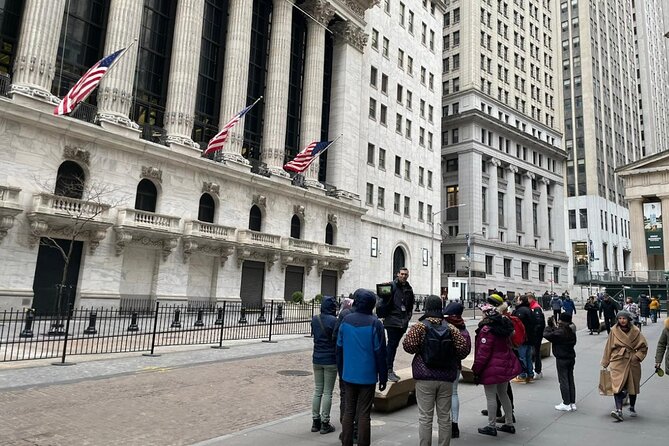
This is the centerpiece stretch. You’ll spend about 35 minutes walking the Wall Street corridor and getting an exterior view of several major markers, including the New York Stock Exchange area (without entering), Federal Hall, Trinity Church, and the JP Morgan Building.
A big value point here is the way the guide helps you see the buildings as arguments. Each facade and institution represents power, authority, and trust mechanisms, even if you never step inside.
A few practical things to expect:
- The NYSE is seen from outside, and entry is not included.
- You’ll also get guidance around Federal Hall and Trinity Church, which helps you understand why they matter to the financial story.
- Because so much is exterior, the guide’s explanations become the “ticket” for making sense of what you’re viewing.
If you like city walks where you learn what to look for, this portion tends to be the one that makes the rest of the district feel less random.
Federal Reserve Bank exterior: gold bullion, vaults, and the scale of money
At the Federal Reserve Bank of New York, you get about 10 minutes with an exterior visit, not an indoor vault tour. Still, the tour includes one of the most striking facts mentioned: the bank has subterranean, highly-secured vaults where the largest reserve of foreign-held gold bullion is kept.
That detail matters because it anchors the tour’s story in something physical. In finance, most things feel abstract until you connect them to real storage, real security, and real constraints.
Admission is not included here, and the stop is about understanding what the institution does and why it’s built the way it is.
The oldest congregation and Alexander Hamilton’s burial site
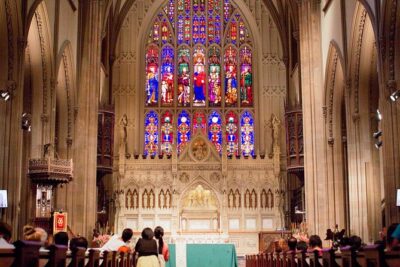
The itinerary also points you toward Trinity Church, described as the oldest congregation in NYC, with a historic role tied to Alexander Hamilton. The tour frames this as part of the broader Wall Street story because Hamilton is repeatedly connected to the foundations of the financial system.
This makes the end of the walk feel more grounded. Instead of ending at another landmark photo, you reach a place tied to a person whose ideas helped shape how money would be organized in the US.
It’s a natural closer because it ties the symbolism of Wall Street back to actual history and actual people.
Guides matter here, and the guide talent shows
Two guide names come up strongly in the feedback: Jess and Maia. Jess is noted as having a background as a lawyer with the SEC, which gives the tour a clear, policy-aware way to interpret what you’re seeing. Maia is praised for strong context, memorable stories, and for being generous with time.
I also like the no-headphones approach. One review highlights that you are not made to use headphones, which means you hear the guide clearly as you walk and you are not juggling extra gear. It’s also easier to ask questions on the move.
If you want a tour where the guide can explain the “why” behind the buildings, this is one of the better options in this part of NYC.
Who this walking tour is for, and what to bring
This tour fits best if you’re the kind of traveler who likes politics, economics, and how institutions work. It’s also a strong pick if you want an efficient Wall Street introduction that doesn’t eat a whole day.
The tour is described as requiring a moderate physical fitness level. That usually means: wear comfortable shoes, plan for regular walking on city sidewalks, and bring water if you tend to run warm.
Service animals are allowed, and the group size is capped at 30, which helps keep the experience from turning into a loud bottleneck.
Price and value: $49 for a tight, story-driven route
At $49.00 per person for about two hours, you’re paying for a guided interpretation of a concentrated set of sights. The value comes from what you do with that time: you get context that turns exterior buildings into a readable timeline.
You also get several included elements that would cost extra on your own:
- A licensed guide
- The Netherland Monument stop in Battery Park
- Stops tied to major landmarks like the Alexander Hamilton Custom House and Bowling Green Park
You do not get NYSE entry, and some museum-related stops are exterior only. So the deal is not about access, it’s about clarity. If you like the idea of learning what to notice while you walk, the price generally makes sense.
Booking trends show it’s commonly reserved ahead, with about 16 days in advance on average, so if you’re traveling during peak periods, it’s smart to plan early.
Should you book How Money Was Made Wall Street Walking Tour?
I’d book it if you want Wall Street that feels human, political, and connected to the US financial system’s beginnings. The route is short, the guide work sounds strong, and the pacing makes it easy to combine with other NYC plans.
Skip it if your top priority is inside access, especially the New York Stock Exchange. This tour is mainly an exterior story, and the moments that feel “inside” are delivered through explanation rather than entry tickets.
If you’re curious how symbols, buildings, and parks fit into the story of money, this one is a solid use of your time in lower Manhattan.
FAQ
How long is the How Money Was Made Wall Street walking tour?
The tour is about 2 hours, approximately.
Where does the tour start and where does it end?
It starts at 1 Bowling Green, New York, NY 10004, USA and ends at Trinity Church, 89 Broadway, New York, NY 10006, USA.
Is the New York Stock Exchange entry included?
No. The tour includes viewing the New York Stock Exchange from outside, but NYSE entry is not included.
What is included in the tour price?
The tour includes a licensed guide and the following included points: the Netherland Monument in Battery Park, the Alexander Hamilton Custom House, Bowling Green Park, and the NYSE (no entry).
Are museum or other attractions admission tickets included?
Not all admissions are included. The National Museum of the American Indian stop is marked as admission ticket not included, and Fraunces Tavern Museum is also marked as admission ticket not included. The Federal Reserve Bank stop is listed as exterior, with admission tickets not included as well.
What language is the tour offered in?
The tour is offered in English.
What is the group size limit?
The tour has a maximum of 30 travelers.
What is the cancellation policy?
You can cancel for free up to 24 hours in advance for a full refund. If you cancel less than 24 hours before the start time, the amount paid is not refunded.
More Walking Tours in New York City



More Tours in New York City




More Tour Reviews in New York City



Not for you? Here's more nearby things to do in New York City we have reviewed












More Wall Street Tours to consider.
 ★ 4.5NYC City Tour: Statue of Liberty, 9/11 Memorial, Wall StreetTickets from $392,059 traveller reviews
 ★ 4.5Wall Street Insider Tour with a Finance ProfessionalTickets from $39660 traveller reviews
★ 4.5Wall Street Insider Tour with a Finance ProfessionalTickets from $39571 traveller reviews
★ 4.5Wall Street Insider Tour with a Finance ProfessionalTickets from $39660 traveller reviews
★ 4.5Wall Street Insider Tour with a Finance ProfessionalTickets from $39571 traveller reviews
 ★ 5.0Manhattan Group Tour Including Wall Street and 911 MemorialTickets from $39408 traveller reviews
 ★ 4.6Wall Street Tour with 9/11 Memorial and Statue FerryTickets from $39367 traveller reviews
 ★ 4.9Wall Street and Financial District Walking TourTickets from $34284 traveller reviews
More useful New York routes