
Review · CENTRAL PARK TOURS
Best of Central Park Tours by Pedicab – Stories & Photos
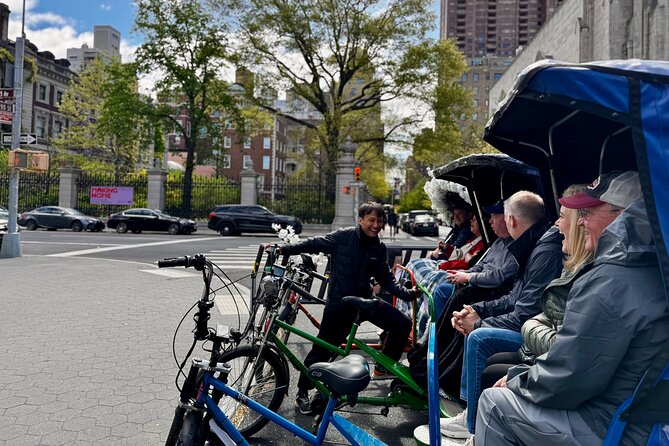
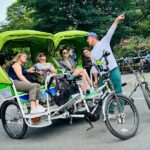
Central Park, on wheels and in style. This private pedicab tour is built for an easy sweep through the park’s most famous photo moments, with guided stops and picture help along the way.
I love that you ride with a friendly licensed NYC guide, not just a driver, so the big landmarks come with stories you can actually use. I also like the practical touch of blankets in cold weather and rain cover if the sky changes plans.
One thing to consider: the tour needs 2 people minimum, and a car seat is not allowed on the pedicab.
Key points to know before you go
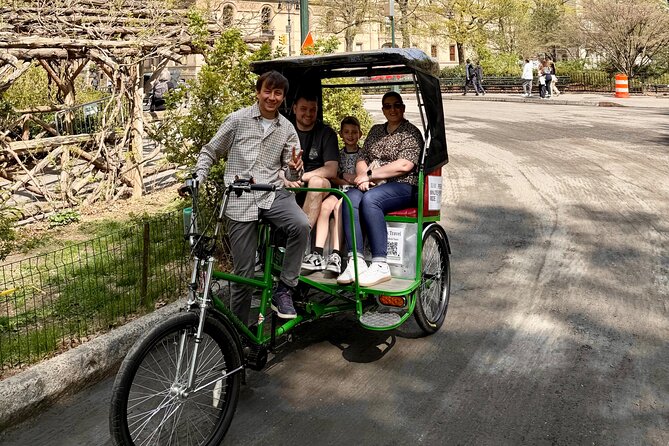
- Private pedicab ride means your pace, your photo stops, and less effort than walking the whole park.
- Licensed NYC guide brings the background, plus film locations and fun local details.
- Photo stops with help means you should end up with better pictures than a hurried selfie routine.
- Classic Central Park landmarks are spread across your route, including Bethesda, Bow Bridge, Strawberry Fields, and more.
- Weather-friendly extras like blankets and rain cover help you stay comfortable.
- Most stops are free once you are in the park, so your $38.40 mainly buys time, access, and storytelling.
Why a private pedicab tour works in Central Park
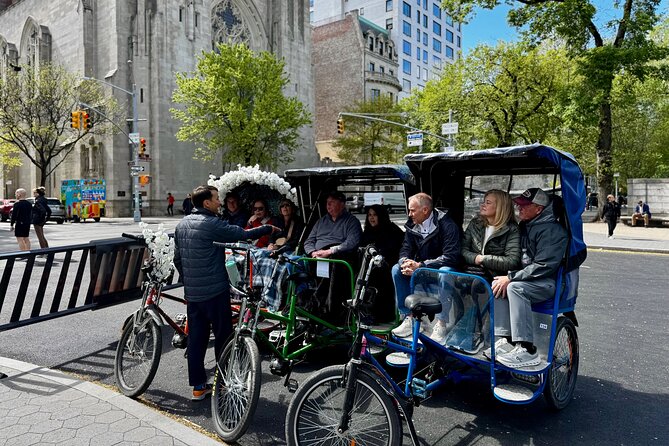
Central Park is huge, and it can feel like a lot when you are trying to see everything. A private pedicab cuts through that problem. You still get the park experience, but you spend less time marching between distant sights and more time enjoying the views.
For this tour, you are also getting a licensed NYC guide who can explain what you are looking at, not just point. That matters at Central Park, where so many places look beautiful but also hide a lot of planning, engineering, and design decisions behind the scenes.
And you are not stuck in a rigid group schedule. The tour is private, so your group can take breaks, linger for photos, and reset your brain before the next iconic stop. The ride is also designed to be easy on your feet, which is a big win if you want to see more than you would comfortably walk.
You can also read our reviews of more photography tours in New York City



The real value behind the $38.40 per person
Let’s talk money without the fog. At $38.40 per person, you are paying for speed, convenience, and interpretation. You are not just buying transit across Central Park. You are buying someone to connect the dots, so Bethesda Fountain is more than a pretty spot, and Bow Bridge is more than a “stand here and pose” moment.
The tour also includes practical extras that help your day go smoother. Blankets in cold weather, plus cover if it rains, are the kind of small things that keep a trip from turning into a shiver-and-quit situation. And since the tour is ticketed with a mobile ticket and runs in English, you get a straightforward experience without extra planning steps.
Finally, the route hits major sights and also brings in Central Park “stop-and-look” places where the details make photos better. That combination is what makes the price feel fair, especially if you want a high-impact Central Park visit without turning your legs into sandbags.
Your ride plan: photo stops plus stories that make landmarks make sense
This is a 1 to 3 hour tour, depending on how you pace it. You start at 1415 6th Ave, New York, NY 10019, and the experience ends back at the meeting point. There is no hotel pickup, so build your travel time to arrive on time.
Once you’re in the park, you can expect multiple short stops built around iconic scenes, plus the kind of photo pauses where a guide helps you frame the shot. The guide also threads in film locations and local stories, which is especially fun if you have seen movies set in Central Park and want to connect the screen version to the real one.
Below is what you can expect as your route moves through Central Park’s most photographed zones.
From Bethesda Fountain to Bethesda Terrace tilework
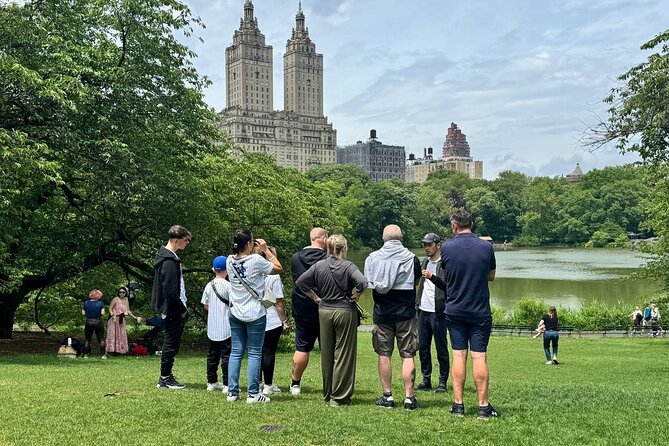
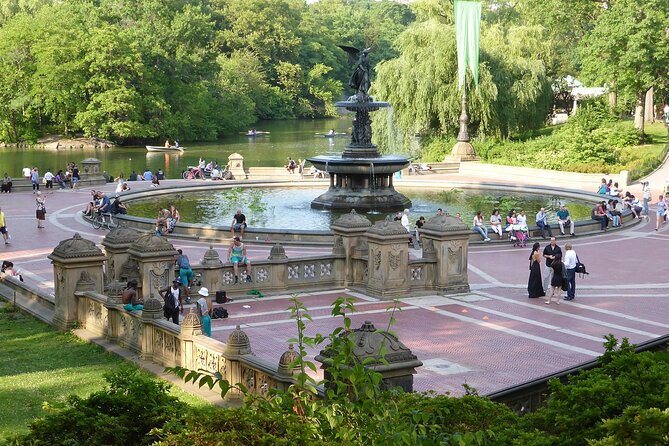
Bethesda Fountain is one of those places that looks instantly familiar. In the center is the Angel of the Waters, designed by Emma Stebbins and unveiled in 1873. It is tied to the biblical story of healing at the Pool of Bethesda, and the guide’s job is to point out what that symbolism means in the setting.
If you are a movie fan, this stop has a bonus layer. Bethesda Fountain shows up in Home Alone 2: Lost in New York, Enchanted, The Avengers, and Elf, among other appearances. Seeing the fountain in person makes those scenes feel less like random movie trivia and more like a real landmark you can picture anywhere else in the city.
A short ride brings you to Bethesda Terrace, with its sweeping two-level design and a view toward The Lake. One standout detail is the arcade ceiling covered in Minton encaustic tiles. These tiles were installed in the 1860s, then removed during renovations in the 1980s because restoring them was too costly. After more than 20 years in storage, the Central Park Conservancy funded a restoration project, and the tiles went back in place starting in 2004, with completion in 2007. That makes Bethesda Terrace feel like a living conservation story, not just a pretty backdrop.
A nearby easy photo stop is Cherry Hill Fountain, with granite and bluestone and a design originally meant as a watering trough for horses. Even if you are not “into fountains,” this is a good example of how Central Park blended function with ornament.
The Lake, rowboat views, and the bridge that photographers chase
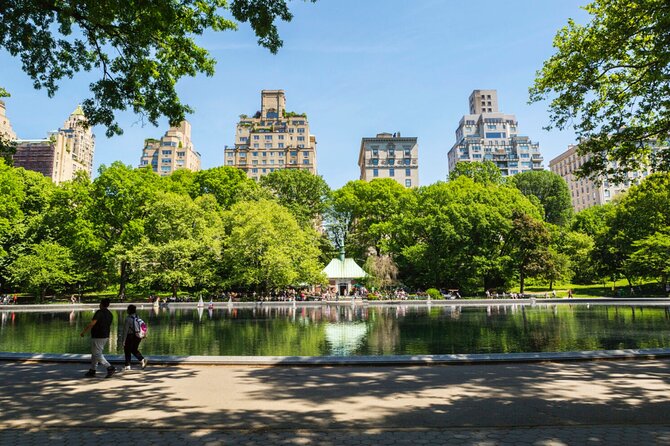
The tour continues toward The Lake, often considered the heart of Central Park. The key here is how the Lake connects multiple zones, including the Ramble and Bethesda Terrace. You get the sense of open space and changing shoreline scenery as you move along paths.
You will also see the Boathouse by the Lake. It has film credit in Sex and the City and 27 Dresses. The guide can explain that the current Boathouse dates to 1956, after the older structure burned, and that today it runs year-round with dining and heated outdoor seating, so you can still enjoy Lake views in colder seasons.
Then comes Bow Bridge, one of the park’s most romantic, most photographed iron bridges. It was completed in 1862 and underwent a major restoration in 1974. It is temporarily closed at times for renovations, so it helps to check weather and day-of conditions if you are planning around that specific moment. The guide will point out how the bridge’s shape frames The Pond and the Midtown skyline.
Bow Bridge is also linked to a long list of film and TV appearances, including Manhattan, The Way We Were, Spider-Man 3, and Night at the Museum. Even if you do not care about film history, this is still a strong stop because the views are genuinely worth the pause.




The Mall and Central Park’s “straight line” moment
Next up is The Mall, also known as Literary Walk. This is one of the most iconic pathways in the park, lined with tall American elm trees. Here is the fun fact that makes it more than a pretty walk: The Mall is the only intentionally straight line within Central Park’s mostly winding layout.
The guide can also point to why it earned the nickname Literary Walk. You will find statues honoring writers such as William Shakespeare, Robert Burns, and Sir Walter Scott, plus a statue of Christopher Columbus at the southern end. If you like details, this stop is the kind where you can look up, look around, and still feel like you are making progress.
Because the tour is by pedicab, you can take in this corridor without feeling like you need to walk the full length. You get the vibe fast, and you can spend more time stopping at the places you actually want photos.
Classic Central Park fun: carousel, chess, and old-school play
Central Park has a lighter side, and this tour weaves it in with stops that feel almost like time travel.
At the Central Park Carousel, the guide can explain the history behind the ride. The original carousel dates back to 1871 and evolved over the years. The current version was installed in 1951, making it the park’s fourth carousel. The carousel is the kind of craft you do not forget once you see it, with 57 carved and painted horses from the Stein and Goldstein company. It is a big hit for families and also for adults who just want an honest moment of joy.
Then there is the Chess & Checkers House, an octagonal brick structure built in 1952. It sits surrounded by 24 game tables, shaded by a wooden trellis. The idea is simple and smart: strategy and conversation, right in the center of the park. This stop also shows up in popular culture, including the 1993 film Searching for Bobby Fischer, which helps explain why the chess tables feel like a New York institution.
For something that looks whimsical but is also practical, the Dairy House is worth a quick stop. Built in 1870 in Gothic cottage style, it started as a refreshment spot for children and families with fresh milk and sandwiches. After it fell into neglect, it was restored in the 1980s and now serves as a visitor center with maps and brochures. If you like using a day like this to plan your next hours, that practical info can be a quiet win.
North-of-the-center sights: Wollman Rink, the Pond, and the Zoo
Central Park has different “moods” depending on where you are, and your ride can shift those moods fast.
If your season lines up, Wollman Rink is an easy must-see. It opened in 1950 and has long been a winter destination, set against the Manhattan skyline. It is named after Kate Wollman, who donated $600,000 in her family honor. After a decline in the 1980s, it was renovated and reopened, restoring its role as a public skating hub. Even if you are not skating, it is a great photo stop for that classic New York winter frame.
Then you may head toward Gapstow Bridge, one of the most photographed spots in the park. Built in 1874 and designed by Jacob Wrey Mould, the first version was wood and cast iron. After structural issues, the stone version replaced it in 1896, designed by Howard & Caudwell. The ivy-covered arches and the view over The Pond make it feel timeless and peaceful. This is also a place where you can spot turtles and ducks around the water.
The route also includes The Pond, a 3.8 acre water setting created from a former rocky area and natural brook. It appears in Home Alone 2: Lost in New York, in the scene with the pigeon lady. That cinematic connection gives you an instant way to “read” the location when you are standing there.
From there, you might get Central Park Zoo in the mix. The zoo began in 1864 as a small menagerie and became the city’s first official zoo in 1934 when permanent enclosures were built. In 1988, it shifted toward more natural habitats and is managed by the Wildlife Conservation Society. If you have limited time and want family-friendly variety, this is a strong stop.
And if you want a quick emotional story moment, the Balto statue is part of the ride. It commemorates the sled dog hero of the 1925 Serum Run to Nome, when diphtheria antitoxin needed to reach a remote town through blizzards and extreme cold. It is a short stop with big meaning, and it gives you something memorable beyond scenery.
Rumsey Playfield and Conservatory Water for calmer breaks
Not every Central Park stop is built for photos that scream. Two calmer options help you slow down.
Rumsey Playfield is an outdoor field area with a past tied to Central Park’s changing uses. It started with a restaurant created by Central Park co-designer Calvert Vaux, then later became an Art Deco nightclub. In the 1980s, the Central Park Conservancy turned it into a sports field for older children. By 1990, SummerStage relocated here and continues to host performances. Even if you are visiting off-season, it is a meaningful reminder that Central Park is not just sightseeing, it is also community life.
Conservatory Water is a tranquil pond area known for model boat sailing. It has a story too: it was originally designed as a formal reflecting pool with a planned conservatory that never got built, but the pond still became popular. Today, you will find miniature sailboat traditions and family-friendly benches. The guide can tie it to films like Stuart Little (1999), where the pond becomes the setting for a model boat race.
Strawberry Fields, the Dakota, and Sheep Meadow at human speed
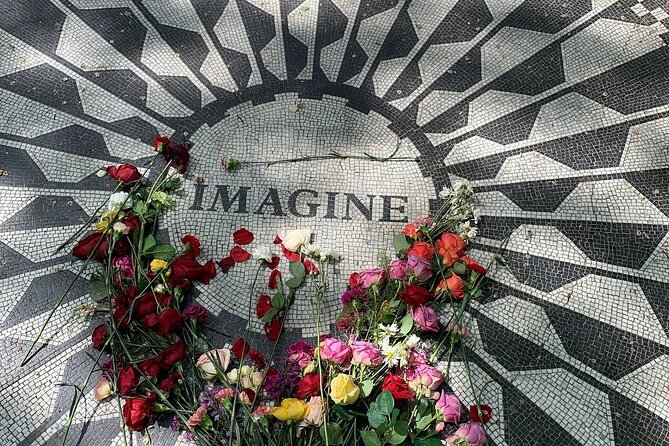
You cannot miss Strawberry Fields, a 2.5 acre tribute to John Lennon. It is designed as a living memorial, created after Lennon’s death in 1980, by landscape architect Bruce Kelly. The name comes from Strawberry Fields Forever, inspired by a former children’s home in Liverpool near Lennon’s childhood home. At the heart of the memorial is the Imagine mosaic, which people often visit with flowers and music or poetry. This stop works best if you give it a few minutes of quiet, even on a day packed with landmarks.
Nearby, the Dakota building is a major photo and story stop. Completed in 1884, it is famous for Renaissance Revival style and luxury interiors, and it housed major residents including John Lennon and Yoko Ono. Lennon was killed outside the building in 1980, which makes the location historically heavy even if you only spend a short time there. It also appears in Rosemary’s Baby as a filming location, so the building’s Gothic feel makes cinematic sense.
Then comes Sheep Meadow, one of the park’s biggest lawns. It started as a grazing area for sheep in the early 20th century and now is where people relax, read, picnic, and enjoy wide-open views. The dramatic part is how quickly you feel that contrast between huge city skyline and open grass. Sheep Meadow also has film connections, including Ghostbusters and The Fisher King, where the park’s setting helps carry the mood.
Alice in Wonderland statue, Cleopatra’s Needle, and Belvedere Castle views
This tour also reaches into Central Park’s “big landmark” edges.
Alice in Wonderland Statue is a charming family-friendly stop. It was donated by George Delacorte in 1959 as a gift to New York City children, and it functions as a memorial tied to his wife Margarita, a devoted reader. It is interactive and photo-ready, which means it is fun without being complicated.
Then you may see Cleopatra’s Needle, the oldest outdoor monument in New York City. It dates back more than 3,500 years and was carved in Egypt during the reign of Pharaoh Thutmose Ill, then moved through Alexandria and eventually gifted to the United States in the late 1800s. It was installed in Central Park in 1881 between the Great Lawn and the Metropolitan Museum of Art. If you like old-world history in a modern setting, this is the kind of stop that surprises you with how long it has been here.
Speaking of the Met, the Metropolitan Museum of Art (The Met) is also part of the route. The museum opened in 1880 along Central Park’s eastern edge in a building designed by Calvert Vaux. Major expansions followed, including Fifth Avenue entrance and grand façade design by Richard Morris Hunt, with additional wings by McKim, Mead & White. The Met houses over 2 million works spanning 5,000 years. Even if you do not go inside on this tour, seeing it from the park side helps you connect Central Park to one of the world’s top museum neighborhoods.
For views and atmosphere, Jacqueline Kennedy Onassis Reservoir is a stop with real engineering scale. Built between 1858 and 1862, it holds more than one billion gallons of water and has a curvilinear footprint designed to harmonize with the park. There are gatehouses along the shores, which you can spot as you pass.
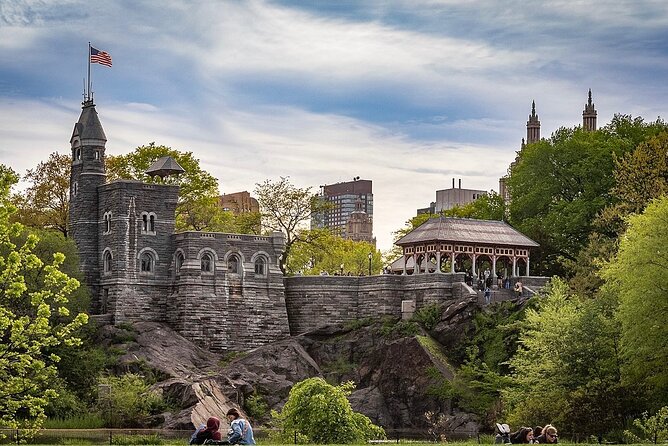
Finally, Belvedere Castle is the whimsical height in the park. Designed by Calvert Vaux and Jacob Wrey Mould in 1867 as a decorative folly, it offers panoramic views from Turtle Pond, the Great Lawn, and the Ramble. It also has an official weather station history since 1919, which ties science to scenery in a way that feels very New York.
Quick logistics that affect your day (more than you think)
A few details can make or break your comfort level.
This is offered in English with a mobile ticket. It does not include hotel pickup and drop-off, so plan your arrival and easy meeting. The tour needs good weather, so if conditions are bad you might be offered a different date or a full refund.
On the comfort side, the pedicab is designed for easy access around the park. Service animals are allowed. One limit to know: you cannot bring a car seat on the pedicab.
Should you book this Central Park pedicab tour?
Book it if you want a high value Central Park day with iconic stops, guided stories, and help getting great photos, without turning the day into a marathon. It is especially worth it if your group includes people who would rather conserve energy, or if you want to see a lot without constantly checking maps.
Skip it or think twice if you are the type who loves long, uninterrupted walks and wants to wander slowly at your own pace without planned photo stops. Also check your travel style if your group is smaller, since the tour has a 2 person minimum.
If you want Central Park with less effort and more context, this is a smart pick.
FAQ
What is the price per person?
The tour price is $38.40 per person.
How long is the tour?
The duration is about 1 to 3 hours.
Where does the tour start and end?
It starts at 1415 6th Ave, New York, NY 10019, and ends back at the same meeting point.
Is it a private tour?
Yes. It is a private tour/activity, and only your group participates.
Is the tour offered in English?
Yes, the tour is offered in English and you receive a mobile ticket.
Are any stops included that have admission tickets?
The Central Park segment shows Admission Ticket Included, while several listed stops are marked free, such as Wollman Rink, Gapstow Bridge, The Mall, Bethesda Fountain, and Bethesda Terrace.
What should I know about bringing a child car seat or service animal?
Car seats are not allowed on the pedicab, but service animals are allowed.
More Photography Tours in New York City

More Tours in New York City

More Tour Reviews in New York City
Not for you? Here's more nearby things to do in New York City we have reviewed
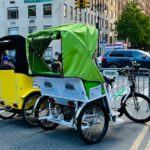



More Central Park Tours to consider.
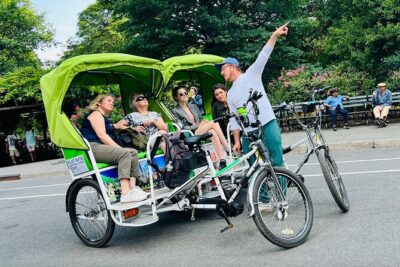 ★ 5.0Central Park Pedicab Guided ToursTickets from $387,108 traveller reviews
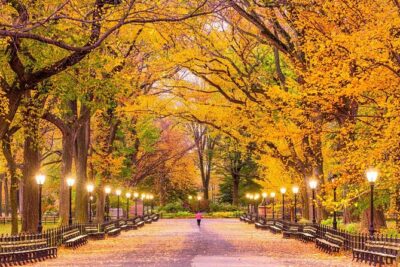 ★ 5.0Private Central Park Pedicab TourTickets from $386,981 traveller reviews
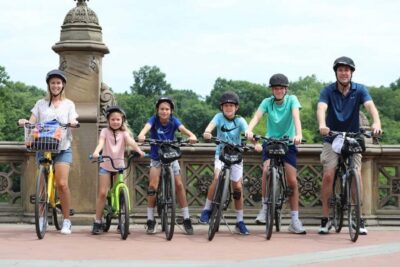 ★ 4.2Central Park Bike RentalsTickets from $92,528 traveller reviews
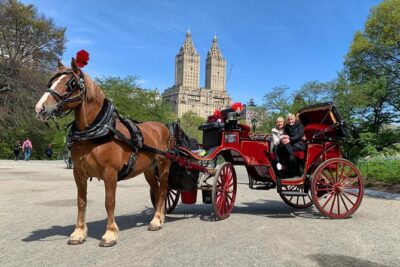 ★ 5.0Official NYC Horse Carriage Rides in Central Park since 1979 ™Tickets from $992,365 traveller reviews
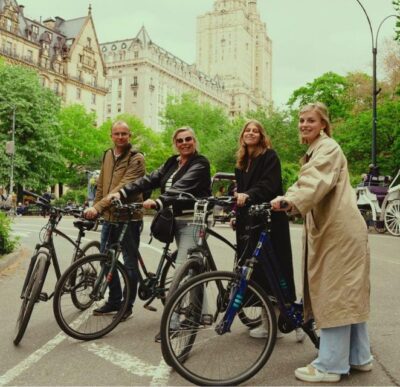 ★ 4.1Central Park Bike RentalTickets from $81,651 traveller reviews
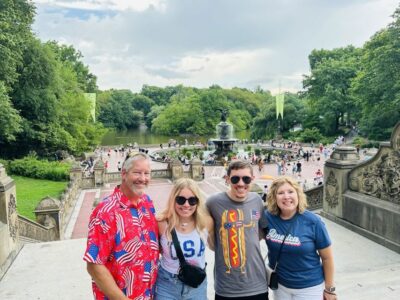 ★ 4.9Private Central Park Pedicab TourTickets from $401,637 traveller reviews
 ★ 4.7Central Park Bike RentalTickets from $91,509 traveller reviews
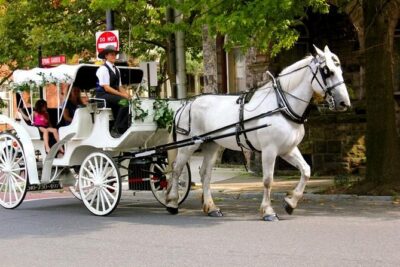 ★ 4.0Carriage Ride in Central Park (VIP – PRIVATE) Since 1964™Tickets from $141,074 traveller reviews
More useful New York routes