
Review · NEW YORK CITY TOURS
Lower East Side Food Tour: Taste NYC’s American Dream
Four tastings, one sharp lesson in immigration. This small-group Lower East Side tour turns quick bites into a guided walk through the neighborhood’s changing cultures, from the African Burial Ground National Monument to Chinatown dumplings and an Italian stop in Little Italy. I like that the pace works with food stops built into the route, not tacked on at the end, and I also like the way the guide connects what you taste to what you see on the street. One consideration: a lot of the tour happens outdoors, and if your timing feels a little fast, it’s usually because the itinerary packs a lot into about 3 hours.
I’ve seen guides named Greg, Alex, David, Jesse, Astrid, Erik, and Tavia praised for making the stories click, and that matters on a walk this long. You’ll be in English, with a group capped at 14, and the experience is designed to be family-friendly, while still covering serious topics like burial grounds and immigrant hardship.
Key things you’ll notice on this LES food and history walk
- African Burial Ground first stop: you learn what was found, why the memorial matters, and how both enslaved and free Africans shaped early New York.
- You get two famous city landmarks: the Supreme Court building and a quick look at the area tied to Five Points.
- Chinatown and Little Italy in one route: dumplings and an Italian tasting, plus street art and immigration stories that connect the neighborhoods.
- The guide is the engine: multiple guides are praised for storytelling that makes buildings feel personal instead of random.
- Mostly outdoors, with regular breaks: you’re walking about 1 mile at a relaxed pace, but expect the weather to be part of the plan.
- Dietary limits are real: vegan diets and gluten allergies or intolerances are not supported, though other specific requests can be planned with notice.
Why this Lower East Side food-and-walk tour feels more like a lesson you’ll remember
New York food tours can go two ways: either you eat your way around and learn almost nothing, or you learn a lot and snack so lightly you feel like you’re pretending to be full. This one lands in the middle, and that’s why it works.
You’re not just grabbing a dumpling and moving on. The tastings are tied to the groups who settled, worked, prayed, and fought to survive here. That connection is especially strong on the Lower East Side, where tenements, churches, parks, and memorials sit next to modern bars and murals. So the tour ends with your brain feeling fed, not just your stomach.
The value is also tied to how the route is built. For about 3 hours, you get four included dish samples at four food stops, plus multiple historic sites and neighborhood walks that would be hard to string together on your own without a lot of research. The guide helps you read the neighborhood quickly, so you can keep exploring after the tour ends.
If you hate walking, this still might be too much. You’ll cover around 1.6 km, and you’ll spend time outside. But if you like the idea of a guided neighborhood reset, with snacks as checkpoints, this is a smart fit.
You can also read our reviews of more food & drink experiences in New York City

Price and what you actually get for $54.14
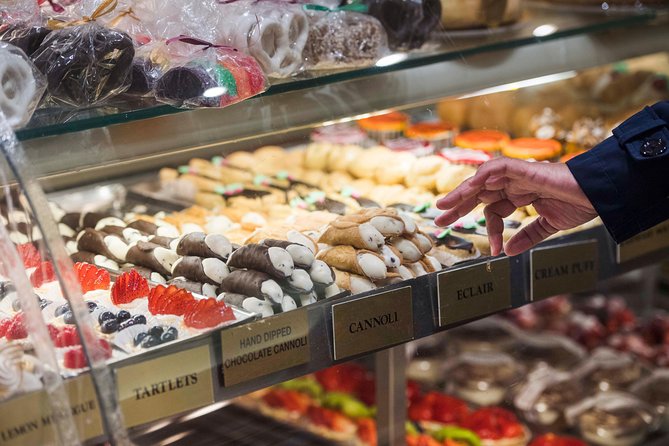
$54.14 can sound like “just a few bites,” until you look at what’s included. This tour isn’t only the food stops. You’re paying for a guided route across several iconic areas: Lower East Side, Chinatown, Little Italy, Nolita, and points along the way where the city’s immigrant story is visible in landmarks.
You’ll get:
- Sample 4 historic dishes on 4 food stops (examples include dumplings, pizza, knish, and empanada)
- A small-group walking tour for about 3 hours
- Stops at major cultural sites, including the African Burial Ground National Monument and the NYC Supreme Court area
- Tips on what else to eat and do during your stay
What’s not included: drinks and extra food. That’s important. You may want to treat this as your main food plan, not a snack add-on. One very practical tip: don’t show up starving, but also don’t plan to eat a big breakfast beforehand, because the tastings add up.
Diet details also affect value. This tour is designed around ethnic dish samples, and vegan options and gluten allergies or intolerances can’t be accommodated. For other specific dietary requests, you need to tell the operator at least 24 hours before the tour starts so they can plan around it.
So the best way to judge the price: if you want both food and immigration history through street-level sites, it’s a good deal. If you want lots of sit-down meals or strict dietary flexibility, you may feel limited.
The walk starts at 290 Broadway, then you slowly stop seeing one neighborhood
Your tour begins at 290 Broadway, and it ends in the Lower East Side near a museum where the guide shares a bit about the museum’s founding and significance. That ending matters because it keeps you close to places you’ll want to return to on your own.
A big part of the appeal is how the route shifts. You start in a more formal, landmark-heavy area, then move into the tighter web of neighborhood blocks, churches, and parks. Along the way, you’ll notice the contrast between what the neighborhood used to be and what it is now.
You also get a built-in rhythm: a landmark, a short discussion, then a tasting. The regular stops make the walking feel manageable. Even if you’re not a history buff, the guide’s job is to connect the dots with simple explanations and specific examples, so you’re not stuck with vague “immigrants came here” talk.
One more practical note: it’s rain, shine, or snow. That means you’ll want weather-appropriate clothes and comfortable shoes with grip. You don’t want to be thinking about your socks while trying to enjoy dumplings.
Stop 1: African Burial Ground National Monument, where the ground tells a hard story
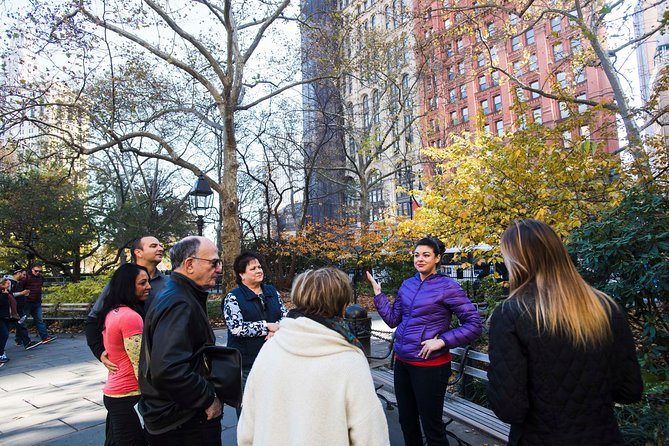
The tour begins with the African Burial Ground National Monument, a stop that quickly sets the tone. Here you learn about the discovery of the burial ground, the building of the memorial and monument, and the significance behind some of the design.
What I find powerful about this first stop is that it’s not presented like an extra. It’s treated like a core chapter of early New York. You also hear about the early African experience in the city, through those who were brought as enslaved people and those who were freed. That context makes the rest of the tour feel less like a food crawl and more like a map of how communities formed and survived.
This is also one of the few moments where the “heritage” part feels heavier than the “snacks” part. That’s not a bad thing. It makes the later tastings more meaningful, because you understand the stakes behind the streets you’re walking.
The practical side: the admission ticket for this stop is listed as free, and the time here is short, about 5 minutes in the plan. You won’t leave with a full museum-level lesson, but you will get the key facts and the why behind the memorial so you can choose to explore more on your own afterward.
Stop 2: NYC Supreme Court area, Irish poverty, a polluted pond, and TV fame
Next up is the NYC Supreme Court stop, also about 5 minutes. Here the guide focuses on the history of the surrounding area, which was once a poor Irish community and even before that involved a polluted pond.
Then comes a detail that makes people smile: you get to see the building that’s famously featured on Law and Order. It’s a fun pop-culture anchor, but the point is deeper. It shows how the city repurposes space, and how stories change when a neighborhood shifts from one stage of life to another.
What I like here is that the tour doesn’t treat old and new as separate worlds. You see the modern building, then you’re reminded what sat there before, and suddenly you’re asking better questions as you walk.
Potential drawback: this stop is brief. If you want a longer sit-down explanation, this tour isn’t set up for that. It’s designed for movement and momentum, and you’ll carry the details forward to later stops.
More NYC tours and experiences for the shortlist



Stop 3: Columbus Park and the Five Points edge you can almost picture
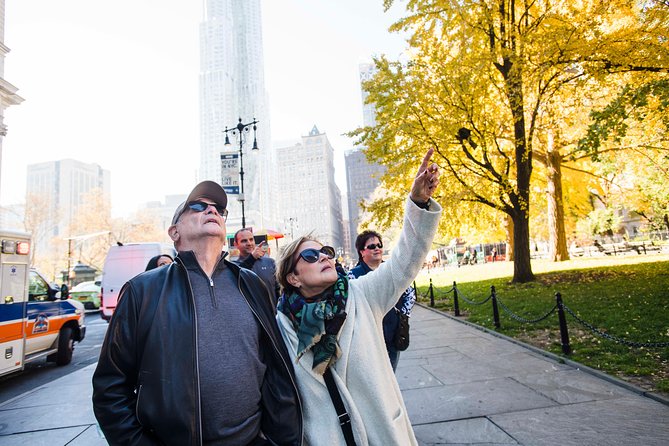
Columbus Park is on the edge of Chinatown, about a 5-minute stop. This is where the tour gets a little cinematic. You’ll talk about what used to be here, including the notorious neighborhood of Five Points.
The guide ties in Irish immigration and shares photos of what the neighborhood used to look like. That photo moment is useful because Five Points can feel like a rumor unless you see what the place looked like. It gives you a way to visualize the scale of change.
This part also sets up the next two neighborhoods. If you’re going to eat in Chinatown and Little Italy, you need to understand that these are not isolated “culture clusters.” They came out of waves of settlement, displacement, and city planning decisions that moved people in and out of these areas.
No tickets here, listed as free, and you won’t be stuck standing around long. Still, because this is a park-adjacent, outdoor moment, come prepared for wind or heat.
Stop 4: Chinatown, dumplings, and a guide who helps you taste with context
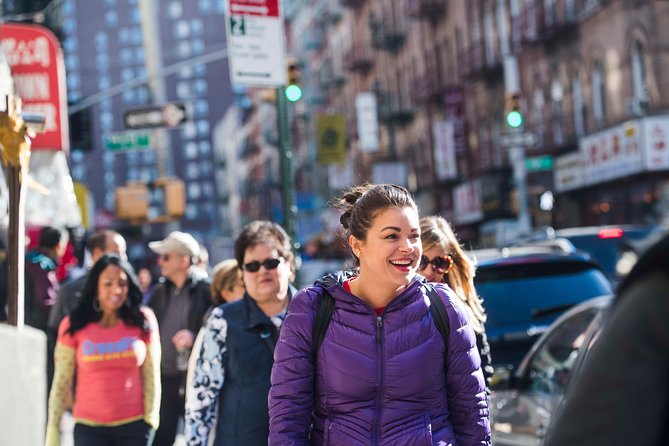
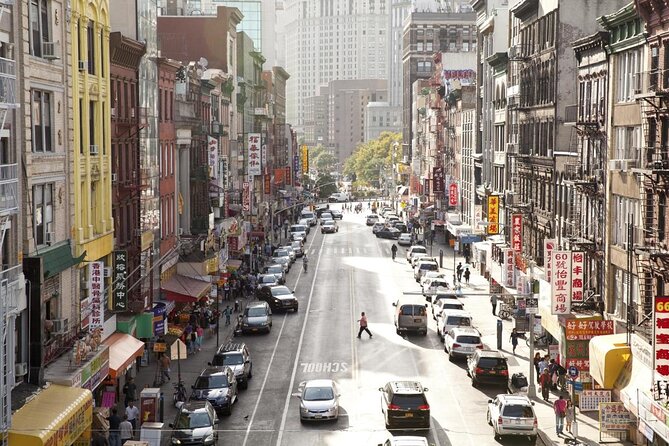
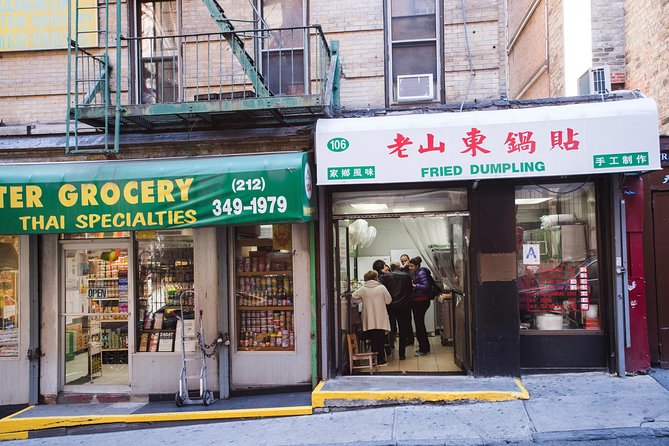
Chinatown is where the tour leans fully into food. You’ll walk through part of the neighborhood, talk about Chinese immigration, and then visit a dumpling shop that’s a local favorite. This stop is about 20 minutes.
What you can expect from the dumpling stop is two things:
- You get a taste that fits the neighborhood story right away.
- The guide gives tips on where else to go in the community, which helps you turn the guided visit into your own mini food plan.
One reason this works for first-timers is that Chinatown can be overwhelming. Streets, signage, smells, crowds. Even if you’re confident, it helps to have someone point you toward a few good next steps. That way, you’re not guessing what’s worth your time after the tour ends.
Diet note, again: the tour can accommodate some specific requests with advance notice, but it cannot cater for vegans or gluten allergies or intolerances. If that’s you, you’ll need to choose another option.
Stop 5: Little Italy near Mulberry Street, an Italian tasting plus street art and crime stories
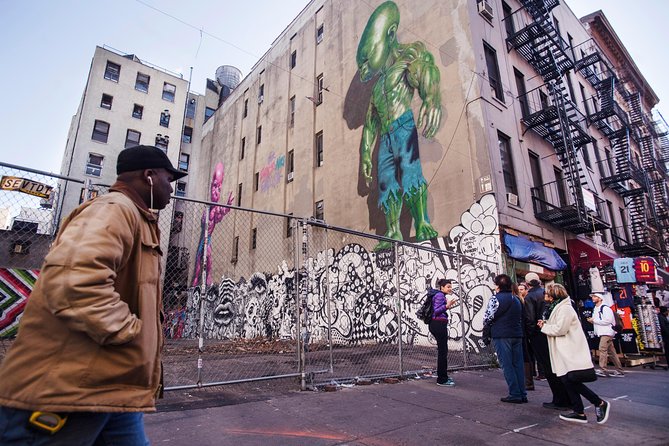
Next, you head up and around Mulberry Street, where the guide discusses Italian immigration. This is another about 20-minute stop and it includes both visuals and food.
You’ll see street art and hear stories about organized crime. Then you’ll visit an historic local Italian food shop for a tasting. That mix matters. Street art is part of how neighborhoods talk now, while crime stories are part of how people experienced the neighborhood then. Together they make the modern street feel like it has a timeline, not just a vibe.
I like that the tour doesn’t reduce Little Italy to postcards. It gives you a sense of why the community formed, what it endured, and how the city’s reputation got built over time.
The tradeoff: because this stop is packed into a short window, you won’t get long inside-restaurant time. The plan emphasizes tastings plus walking, so it’s best if you’re happy with short visits and quick bites rather than lingering meals.
Stop 6: Nolita, St. Patrick’s links, and how “Little Italy” became something else
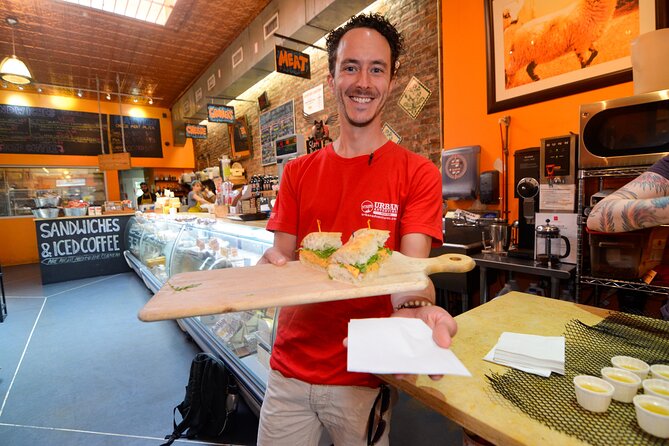
From Little Italy, you move into Nolita, about 15 minutes. This part is meant to show you neighborhood change. The guide points out that Nolita today is loaded with hip bars and restaurants, while historically it was tied to Little Italy.
You’ll also see some of the best street art in the city in this area. That’s one of the hidden strengths of a food walking tour like this. Even if you came for snacks, you end up with photos and visual landmarks for the next day’s self-guided stroll.
Then comes Basilica Of St. Patrick’s Old Cathedral, about a 5-minute stop. The guide shares the hardships Catholic immigrants faced when coming to the country, and you get a chance to see the original St. Patrick’s. It’s a quick stop, but it makes sense here. Religion, community, and immigrant support systems show up repeatedly in this route.
If you’re expecting a purely “cool neighborhood photo walk,” this still includes serious context. If you’re expecting only history, the street art and food breaks keep it from feeling heavy.
Stop 8: Sara D. Roosevelt Park and the M’Finda Kalunga Garden
You also spend time at Sara D. Roosevelt Park, about 10 minutes, including a quick stroll through the northern end. The guide explains why it’s named for FDR’s mother, and then you stop at the M’Finda Kalunga Garden inside the park to talk about Latin American immigration and neighborhood change through the decades.
This is a smart addition to the itinerary because it broadens the story beyond one or two waves. The Lower East Side has always been a crossroads, and this park stop helps you see how Latin American communities fit into that bigger picture.
Again, the stop is short. But it’s long enough to give you a specific place to remember, and a specific thread to carry forward. When you leave, you’ll be better at spotting community gardens and murals and connecting them to real people, not just decoration.
Stop 9: Lower East Side transformation, tenements to community gardens
The final major neighborhood stretch is your last big view of the Lower East Side itself, about 30 minutes. Here you see the transformation from run-down tenements and poverty to a neighborhood currently being gentrified. The guide points out street art and community gardens, then ties it back to Jewish, German, and Latin American immigration.
And yes, you also sample traditional food here. This is your chance to taste again and land the story in the neighborhood you’re actually finishing in.
What I like about this segment is the honesty. The tour doesn’t paint the whole story as a simple success. It makes room for both the struggles and the modern pressures. That gives you something rare for a food tour: you finish with a sense of what you’re seeing, not just that it looks nice on a phone.
Finishing near the museum, so you can keep going without guessing
The tour ends very close to the museum that the guide references during a final stop. You’ll hear stories about the founding of the museum and its important part in Lower East Side history, and then your guides can share tips on getting tickets and exploring the gift shop.
That last bit is practical. Once the tour ends, you’re not stranded with “good luck.” You know what’s nearby and why it matters, so you can decide quickly if you want to spend extra time there.
Who should book this tour, and who might want a different plan
This Lower East Side food tour is a great choice if you:
- Want history through places you can actually see, not just names in a book
- Like food tastings that come with context, especially dumplings and Italian bites
- Are traveling with kids who can handle a guided walk for a few hours
- Prefer a small-group experience with a guide who can answer questions and adjust to the group
It’s not the best fit if you:
- Need vegan options or gluten-free options, since the tour cannot cater to vegans or gluten allergies or intolerances
- Want mostly indoor, sit-down meals
- Hate walking outdoors for much of the tour length
Also, pay attention to pacing. Most guides earn top marks for making the time fly, but one caution comes from the reality of an itinerary this packed. If you’re someone who needs more time between tastings, you might feel rushed. Your best move is to bring a patient mindset and treat the tour like a guided sampler, not a slow dinner.
FAQ
FAQ
How long is the Lower East Side Food Tour?
It runs for about 3 hours.
How far do you walk during the tour?
The tour includes about 1.6 km, which is roughly 1 mile, at a relaxed pace with regular stops.
What food is included?
You get sample 4 historic dishes on 4 food stops, including items such as dumplings, pizza, knish, and empanada.
Are drinks included?
No. Drinks and additional food are not included.
Can the tour accommodate dietary requirements?
Vegans and guests with gluten allergies or intolerances cannot be accommodated. Other specific dietary requests should be shared at least 24 hours before the tour start time so the team can plan.
Does the tour run in bad weather?
Yes, it runs rain, shine, or snow. In rare cases where safety is a concern, it may be postponed or canceled.
Is the tour good for families and kids?
Yes, it is family-friendly. Children under 4 can join free, and there is a reduced child price for ages 4 to 11.
How big is the group?
The tour has a maximum of 14 travelers.
What language is the tour offered in?
The tour is offered in English.
Where do you meet and where does it end?
You start at 290 Broadway, New York, NY 10007, and the tour ends in the heart of the Lower East Side, near the museum, in New York, NY 10002.
More Food & Drink Experiences in New York City
More Tours in New York City






More Tour Reviews in New York City



Not for you? Here's more nearby things to do in New York City we have reviewed










More New York City Tours to consider.
 ★ 4.7SUMMIT One Vanderbilt TicketsTickets from $4751,195 traveller reviews
 ★ 4.7Empire State Building Tickets – Observatory & MuseumTickets from $4725,757 traveller reviews
 ★ 4.6Statue of Liberty & Ellis Island with FerryTickets from $1918,683 traveller reviews
 ★ 4.5American Museum of Natural History TicketTickets from $3715,447 traveller reviews
 ★ 5.0New York in One Day Guided Sightseeing TourTickets from $9913,166 traveller reviews
 ★ 4.6Museum of Modern Art (MoMA) Entry TicketTickets from $3012,540 traveller reviews
 ★ 4.7One World Observatory Skip-the-Line TicketTickets from $3012,329 traveller reviews
 ★ 4.7New York CityPASS®: Save up to 41% at 5 Top AttractionsTickets from $15410,548 traveller reviews
More useful New York routes