
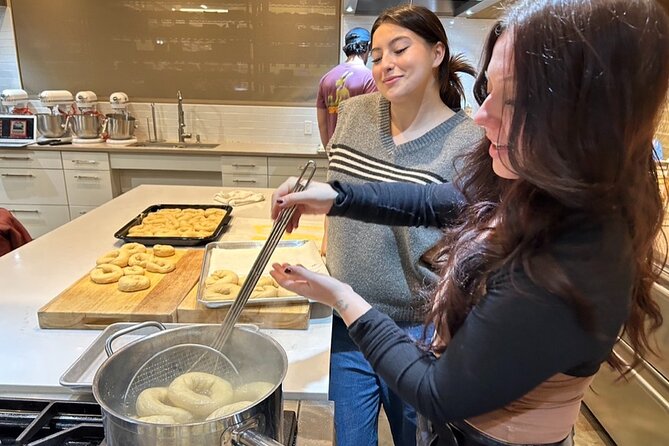
Review · NEW YORK CITY TOURS
NYC: Upper West Side Hands-On Bagel Baking Class
Fresh bagels start with your hands. This hands-on class at Fairway 74th Street Cafe teaches rope-and-loop bagel shaping, boiling, seeding, and baking, then wraps it up with stories and a quiz. I like that you get a technique you can repeat later, and I like that you take home the bagels you made.
One possible drawback: at $150 for about two hours, it is a splurge, so go in hungry for hands-on learning, not for a cheap morning snack. If you are expecting a long, sit-down food experience, plan for something shorter and more workshop-style instead.
Key takeaways before you go
- Hand-roll the rope-and-loop shape so your bagels come out like the real thing
- Boil, seed, and bake as part of the process instead of watching it happen
- Leave with your own batch of bagels plus a recipe to recreate them
- Try gourmet spreads, including cream cheese and smoked fish
- Hear how bagels became New York culture, then test it with bagel trivia
Arriving at Fairway 74th Street Cafe for a Dough-First Morning
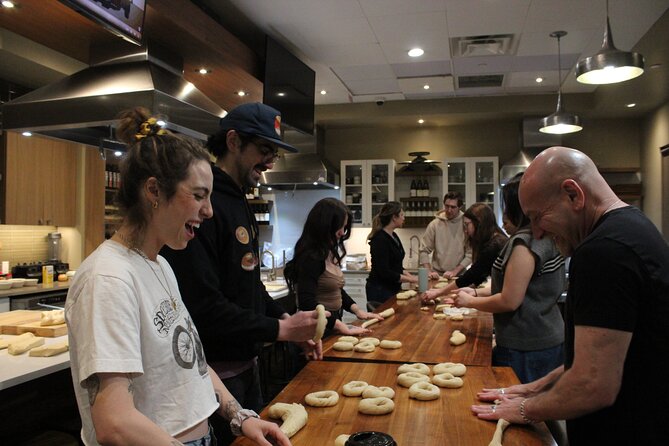
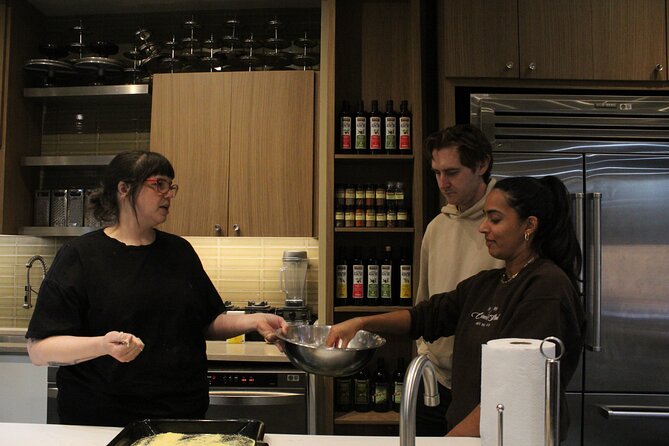
This is the kind of tour that starts with an immediate payoff. You meet at Fairway 74th Street Cafe, 2131 Broadway in the Upper West Side, and the day gets moving fast because you are not just tasting. You are making, from rolling through baking, with an expert guiding your hands.
The location matters. Fairway is a real food market stop, so you get that lived-in New York feeling right away, not a staged studio vibe. Plus, it is close to public transportation, which helps a lot if you are building this into a day that also includes Central Park or a museum nearby.
Logistically, you should expect a small-ish group. The class has a maximum of 24 travelers, which keeps it practical. You can ask questions, and the pace feels like a workshop rather than a lecture where you barely get your turn at the dough.
You can also read our reviews of more cooking classes in New York City



What You Learn First: Rope-and-Loop Rolling That Actually Makes Sense
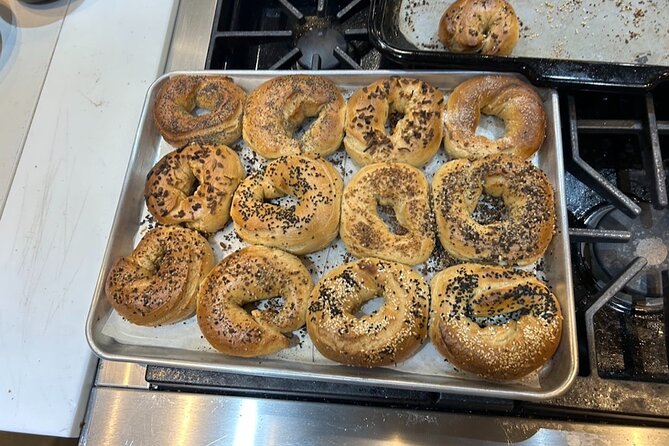
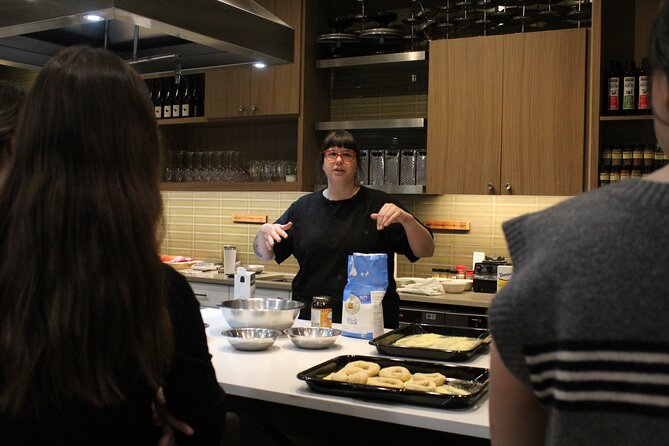
The core skill here is the rope-and-loop method. You roll the dough into ropes, then form the loop shape the right way, with enough tension to hold the form through boiling and baking. The point is not artistic flair. The point is structure.
When I look at bagel-making classes, I focus on whether they teach the mechanics. This one does. You learn the rope-and-loop rolling method as a repeatable process, not as a vague suggestion. That makes the experience more valuable, because you can use the same steps later at home when your kitchen is quieter and your timeline is flexible.
You also do not need experience to join. If you can follow directions and show up ready to work with dough, you are set. Just be ready for the part where your first attempts look a little wonky. That is normal. The class is built to help you correct the shape before it goes into boiling and baking.
Boil, Seed, Bake: The Steps That Turn Dough Into a Real NY Bagel
Here is what separates bagels from other breads: the boil. In this workshop, you do the steps that make New York bagels world-famous, including boiling, seeding, and baking. You are not handed a finished product and told to admire it.
That process does two helpful things for you.
First, it teaches you why bagels have their distinctive texture. Boiling before baking is what sets the surface so it can develop that chewy bite while still baking into a browned crust.
Second, it gives you instant feedback. If your shaping is off, you can see it. If your handling is uneven, you notice it. That feedback loop is why hands-on classes tend to stick.
After you roll and shape, you boil the bagels and then add seeds. Then comes baking. As they bake, you get the cultural side of the experience, but the workshop stays rooted in technique. You learn the workflow end-to-end, which is the big reason this class feels like an education rather than a single food stop.
Cream Cheese, Smoked Fish, and the Spread Strategy
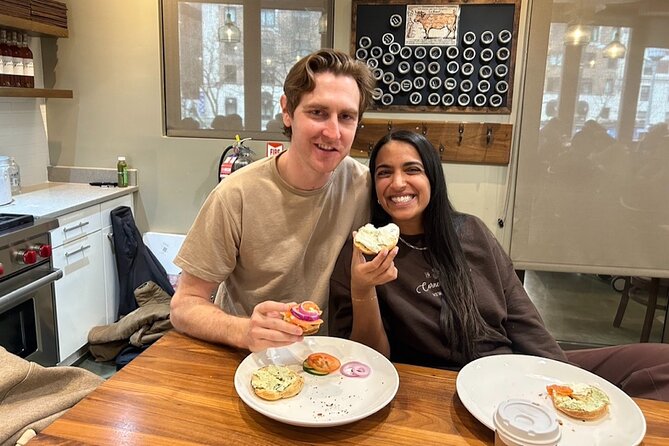
Once the bagels are baking, you get to eat. The sample setup is bagels with gourmet cream cheeses and smoked fish, along with classic accompaniments.
This part is not just for pleasure. It is also for your future self. You can taste how different toppings work with a chewy bagel that still has that fresh-baked crust. That helps when you recreate it later. You start thinking in combinations, not just ingredients.
If you are a fan of traditional flavors, this fits. If smoked fish is not your thing, you still get a structured way to enjoy the bagels your group made, rather than leaving with plain bread and no pairing ideas. Either way, plan for a morning where you actually want to eat. The tastings are part of the full experience, not an afterthought.
Bagel Stories That Put Polish Roots and NYC Tradecraft Into Context
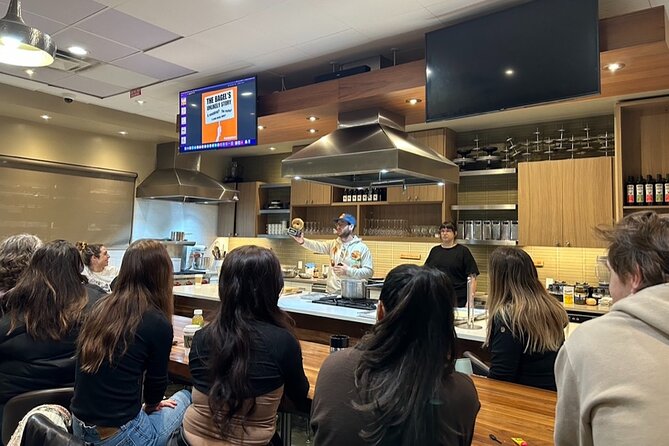
While the bagels bake, you also hear the history behind them. Expect stories that connect Polish origins to the way bagels became a New York City icon. You also learn about elements like the Bagel Bakers Union, the invention of the bagel machine, and a quirky Bagel Wedding story.
What I like about this mix is that it gives your dough work meaning. When you shape, boil, and bake something with a history, it feels less like a random cooking chore and more like you are joining a tradition. It also makes the class more enjoyable if you are not naturally chatty in kitchens. You have a narrative to listen to, then you go back to the practical steps.
The session ends with a light-hearted bagel trivia quiz. That is a nice touch because it turns the history into something you remember. You do not have to be a trivia person to enjoy it. It is more about reinforcing the main points in a low-pressure way, and it adds a bit of energy after the longer hands-on portion.
More NYC tours and experiences for the shortlist





The Bagels You Take Home, Plus Storage and Reheating Tips
This is not a class where you leave with one token bagel. You take home the bagels you made yourself. That is a big part of the value.
Also pay attention to the practical tips you get about handling bagels after the class. You learn how to store, freeze, and reheat them. This matters more than you might think, because a fresh bagel can lose its best texture if you treat it like regular bread.
Here is a simple reality check for your planning. Bagels are at their best soon after baking, so if you can, plan what you will do with them when you get home. If you know you will not eat them right away, freezing becomes your best friend. The class gives you guidance so you do not guess and hope.
Price and Logistics: Is $150 Worth It?
At $150 per person for about two hours, this is not a budget activity. The question is what you get for that money, and the answer is fairly clear.
You are paying for:
- Expert-led instruction on a specific craft technique (rope-and-loop rolling)
- Hands-on steps that include boiling, seeding, and baking
- A set tasting portion with gourmet cream cheeses and smoked fish
- A bagel trivia quiz and the history context
- A recipe plus the bagels you made yourself
If you compare this to simply buying bagels, the price obviously feels high. But this is not a purchase, it is a skill transfer. You leave with the method, plus advice for storage and reheating. That is how the cost turns into value.
Group size also affects value. With a maximum of 24 travelers, you are not stuck watching from the sidelines. You get actual participation time, which is what you want from a hands-on class.
One more logistics note to keep your expectations accurate. This is a morning activity that starts at 10:00 am and runs around two hours. That makes it easy to pair with another Upper West Side plan, but it also means the workshop cannot stretch long. Come for the focused learning.
Who This Class Fits Best on the Upper West Side
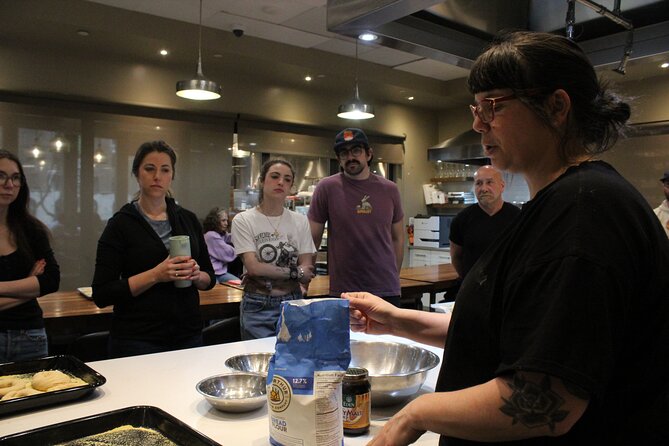
I think this class is a great match if you fall into one of these buckets:
You want a practical souvenir. Not a magnet, not a postcard. You take home bagels you shaped, boiled, seeded, and baked.
You like cooking but do not want a steep learning curve. The class is designed for beginners who want to learn the right technique without needing prior baking experience.
You enjoy food history when it connects to real technique. You will get stories about how bagels evolved and how they became part of New York culture, then you test what you learned with trivia.
If you are the type who gets impatient with hands-on tasks, you might find it a little more work than you expected. It is not just taste and talk. It is dough on your hands. But if you show up with a friendly mindset, that is usually part of the fun.
Should You Book NYC Upper West Side Bagel Baking?
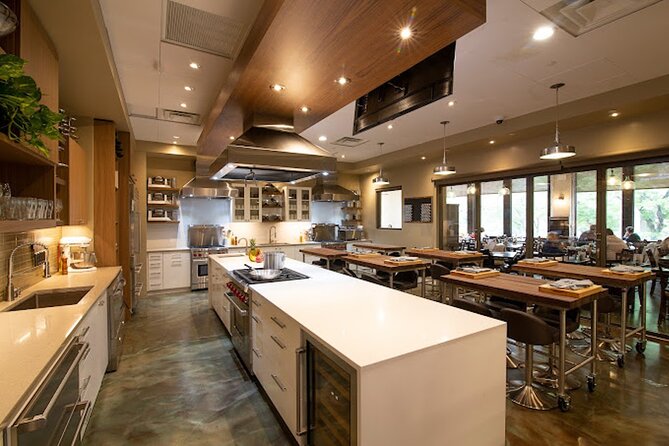
Book it if you want a morning that feels like New York craftsmanship, not a passive tour. The combination of hands-on bagel making, take-home results, and real pairing ideas with cream cheese and smoked fish makes it feel worth the splurge. I especially like that you come away with storage, freezing, and reheating guidance, because it helps your bagels live beyond the event.
Hold off if you mainly want a long meal experience or you are looking for a lower-cost activity. This is built for technique and short, satisfying food time, not for lingering.
If you are already planning an Upper West Side morning, this class is an easy way to add something tasty and skill-focused without needing special equipment. Bring comfortable clothes, expect flour, and treat it like a fun workshop. Then go enjoy the rest of your day with a bagel win in your bag.
FAQ
How long is the bagel baking class?
It lasts about 2 hours.
Where does the class meet?
You meet at Fairway 74th Street Cafe, 2131 Broadway, New York, NY 10023.
What time does it start?
The start time is 10:00 am.
Do I need baking experience to join?
No. It is designed to be doable even if you do not have prior experience.
What do I make during the workshop?
You learn to roll bagels, and you participate in the steps including boiling, seeding, and baking.
What will I get to eat and take home?
You enjoy freshly baked bagels with gourmet spreads such as cream cheese and smoked fish, and you take home the bagels you made yourself.
What is the cancellation policy?
Free cancellation is available. You can cancel up to 24 hours in advance of the start time for a full refund.
Is the class in English and is there a group limit?
The class is offered in English, and it has a maximum of 24 travelers. Service animals are allowed, and it is near public transportation.
More Workshops & Classes in New York City
More Cooking Classes in New York City

More Tour Reviews in New York City






Not for you? Here's more nearby things to do in New York City we have reviewed











More New York City Tours to consider.
 ★ 4.7SUMMIT One Vanderbilt TicketsTickets from $4751,195 traveller reviews
 ★ 4.7Empire State Building Tickets – Observatory & MuseumTickets from $4725,757 traveller reviews
 ★ 4.6Statue of Liberty & Ellis Island with FerryTickets from $1918,683 traveller reviews
 ★ 4.5American Museum of Natural History TicketTickets from $3715,447 traveller reviews
 ★ 5.0New York in One Day Guided Sightseeing TourTickets from $9913,166 traveller reviews
 ★ 4.6Museum of Modern Art (MoMA) Entry TicketTickets from $3012,540 traveller reviews
 ★ 4.7One World Observatory Skip-the-Line TicketTickets from $3012,329 traveller reviews
 ★ 4.7New York CityPASS®: Save up to 41% at 5 Top AttractionsTickets from $15410,548 traveller reviews
More useful New York routes