
Review · NEW YORK CITY TOURS
NYC: Midtown Hands-On Bagel Baking Class
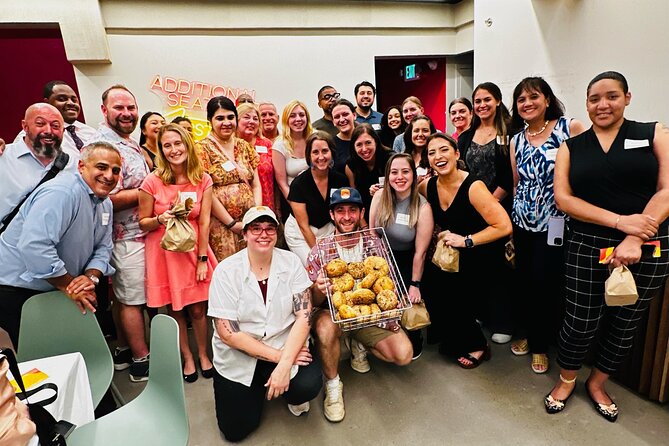
Midtown bagels are all about the method. This hands-on class takes you into an operating bagel shop where you learn what makes New York-style bagels so distinct, from dough behavior to the boil before baking. I like that you leave with recipes and real kitchen tips you can use again, and that the time includes both hands-on making and a shop view of day-to-day production. One thing to consider is the pace is very workshop style, so you will want to be comfortable standing, working with dough, and moving with the group for the full two hours.
You start at Bagel Market, 264 W 40th St, and the setup is built for small groups, capped at 20. Expect step-by-step guidance as you roll and form bagels, boil them, coat them with seeds or seasonings, and bake them. The class is in English, and you will get a mobile ticket after booking. If you are an all-dinner-casual foodie, you will still have plenty to enjoy, but if you hate tactile cooking, this might feel a bit hands-on.
Key things to know before you go
- Roll and form like a shop, with guidance that focuses on technique, not just taste.
- Boil before bake, a step that explains why New York bagels have their chewy bite.
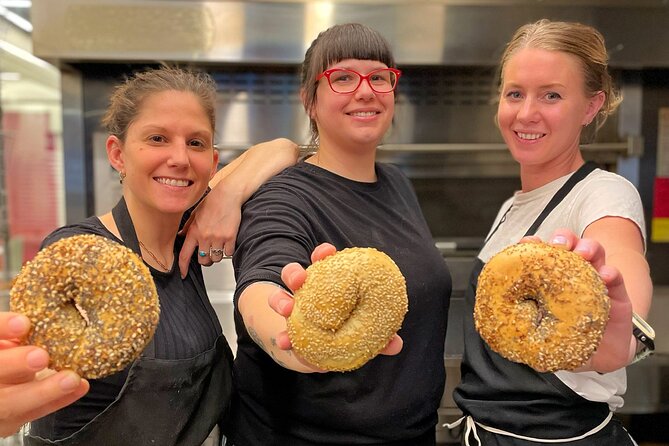
- Sam and Reva teach the rhythm, including how the shop handles extra batches for serving.
- You get recipes to take home, not only a one-time experience.
- Small group setup (max 20) helps you actually participate, not just watch.
- Expect schmears and smoked fish, plus tasting right after baking.
Midtown bagels, taught like a real shop job
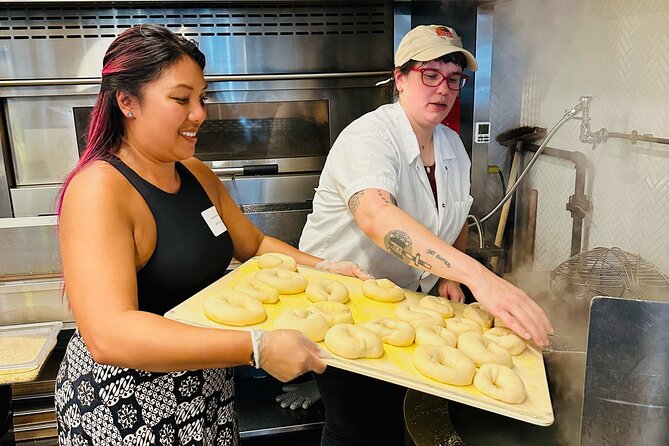
This is not a distant demo where you sit and hope your bagels turn out similar later. The whole point is process. In a working bagel shop, you see how the shop runs and why certain steps matter.
What I like most for you is that the class keeps the “why” close to the “how.” You are learning ingredients and traditional methods in the same flow, so it is easier to understand what you are changing when you shape, boil, seed, and bake. That matters because bagel success is not only about flavor. It is about structure: how the dough holds up, how the boil sets the crust, and how the oven turns that into the classic chewy exterior.
There is also a nice practical angle here. If you have cooked before, you will pick up professional-style cues. If you are new to baking, you still get clear steps and enough coaching to make your end result edible and satisfying.
You can also read our reviews of more cooking classes in New York City



Getting to Bagel Market and settling into the 2-hour rhythm
The meeting point is Bagel Market, 264 W 40th St in Midtown. The experience runs about 2 hours, so the timing is tight in a good way. You should plan to arrive a few minutes early so you are not rushing at the start.
You will be part of a maximum 20-person group, which is big enough to have energy but small enough that instructors can guide individuals. The class includes a behind-the-scenes component, so even though it is hands-on, you are not trapped at one station the entire time. You also get to see how the shop produces bagels commercially, which makes your own batch feel part of a bigger operation.
One detail that affects how you experience it: you are in a working shop environment. Expect movement, kitchen sounds, and a layout where you follow the instructor’s flow. If you want a quiet, slow-paced activity, this is probably not your match. If you want active, food-first learning, it fits well.
Dough, rolling, and shaping: the steps you can repeat at home
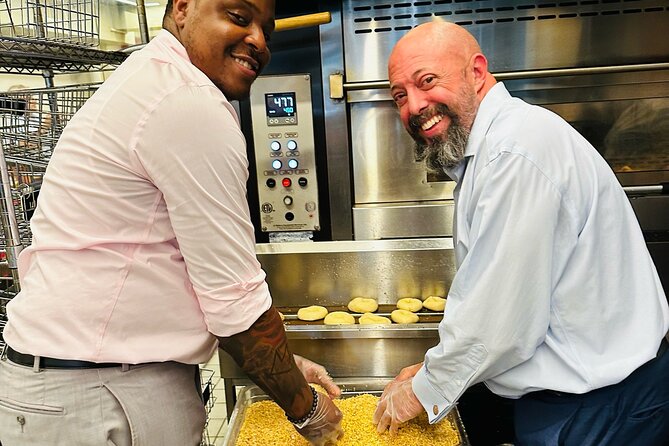
The workshop starts with the foundations. You learn about key ingredients and the traditional method for rolling and forming bagels. This is where most home bakers get stuck, because bagels look simple, but technique matters.
You are guided step-by-step through shaping, so you do not just copy an example. The instructors focus on how to form the dough properly so it bakes into a bagel that holds its shape. The rolling method is especially important because it influences thickness and the way the bagel responds during boiling and baking.
I like that the lesson is designed for learning, not intimidation. Even if you bake at home sometimes, you will likely come away with small adjustments you can try next time, like how you handle dough consistency while shaping or how you think about uniformity so the batch bakes evenly.
If you are baking-practice curious, this is also a great moment to ask questions. Since it is a small group, you have a better chance of getting your specific issue addressed rather than waiting your turn for a general answer.
Boiling and topping: where New York chew comes from
After you shape the bagels, you boil them. That is the make-or-break step that sets New York bagels apart, and the class treats it like the important stage it is.
You get guidance through the boil step and then into coating with seeds or seasoning. The idea is not only to make bagels look right. It is to understand how boiling affects the bagel surface, giving it the chewy character people associate with classic New York-style bagels.
You also get choice in toppings and seasonings. That means you can tailor your bagels while still practicing the core method. It is a smart way to learn because you are not limited to one flavor while you are still mastering technique.
And yes, your choices carry through to what you eat at the end. You will be tasting bagels fresh from the oven with a variety of schmears and toppings, including a sample menu that features gourmet cream cheeses and smoked fish.
Behind-the-scenes at an operating shop
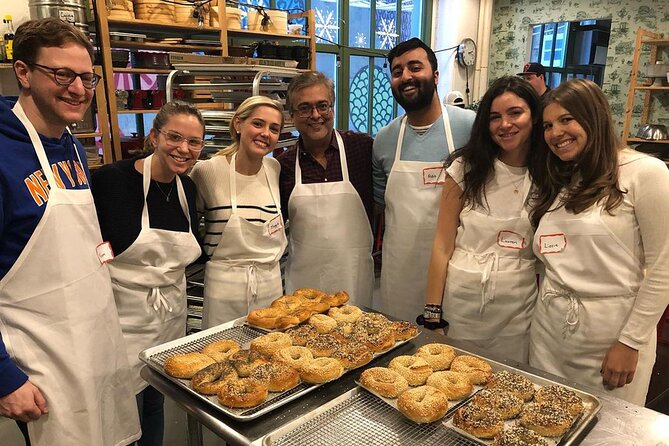
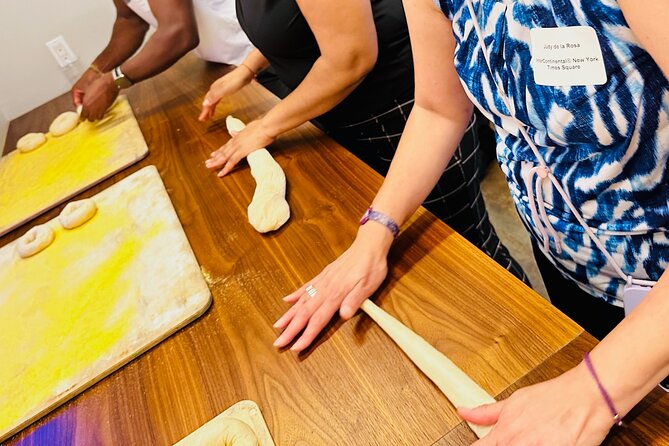
One of the most valuable parts is that you are hosted inside an operating bagel shop. That gives you a realistic view of bagel production and how the shop handles daily flow.
You will get a behind-the-scenes tour and see bagel production on a commercial level. It helps connect the dots between what you are doing at your station and how a shop scales that same work. Seeing that rhythm makes the process feel less mysterious.
The class also includes bagel history and how bagels became such a defining part of New York food culture. For food lovers, this is more than trivia. It gives you a framework for why the method became standard and why New York bagels developed their identity the way they did.
In the end, you are not just leaving with a pastry. You are leaving with context and craft.
More NYC tours and experiences for the shortlist





What you eat, what you take home, and how to plan for it
This is the part you will remember during breakfast the next day.
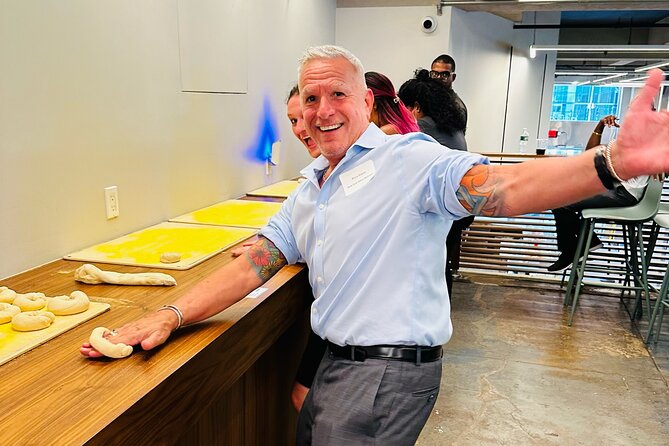
You enjoy your bagels fresh from the oven with schmears and toppings. The sample menu includes bagels with gourmet cream cheeses and smoked fish, and you should expect that classic combination of salty fish and creamy spreads.
You also take home the bagels you made yourself, plus the feeling that you can recreate it. One of the best signs of value is quantity, and the class is set up so you typically end up with more than a token amount. In at least one example, a participant took home 12 bagels.
Storage depends on your pace, but generally, you will want to eat some quickly and freeze the rest if you are not finishing them within a day or two. Bringing bagels home from a shop class also means you might want to plan your schedule around where you can stash them, especially if you are moving around the city after class.
Price and value: is $150 worth it?
$150 for about two hours in New York can feel high until you break down what is included.
You are paying for:
- Hands-on instruction through multiple steps, not a passive tasting
- Recipes and tips you can use at home
- A working shop experience, including behind-the-scenes production viewing
- Fresh bagels to eat during the class
- Bagels you take home you made yourself
- A small group setting with a max of 20
If you compare this to a basic food tour plus a separate cooking lesson, the math starts to make more sense. You are getting a concentrated package: teaching, food, and real shop context in one block. That is why the experience has earned strong recommendations and a 5-star rating from the set of reviews provided.
Still, it is worth being honest about your priorities. If you only want to sample bagels, you will not get that kind of value from a cooking class. If you want to learn a technique and get equipment-free know-how, this is one of the more practical ways to spend time in Midtown.
Also note that the class is often booked about 34 days in advance on average. If your trip dates are fixed, book sooner rather than later so you can match the class to your schedule.
Who this bagel class suits best
This works well for food lovers who like to understand how things are made. It also fits couples and small groups, since the group size stays limited.
You will enjoy it most if:
- You want to learn technique, especially shaping and the boil step
- You like hands-on classes more than pure sightseeing
- You are a baking pro who wants a New York bagel method refresher
- You are a beginner who wants guided steps and recipes to take home
It is also a solid choice if you are traveling with people who care less about ovens and more about flavors and craft. The class still teaches the process clearly, even if you do not plan to bake at home right away.
One practical point: come hungry, or at least come ready for a meal after. Between fresh bagels, schmears, and smoked fish, you can easily turn this into your main food stop of the day.
Should you book this Midtown hands-on bagel class?
Yes, if you want your New York trip to include a skill you can use again. I think the strongest reason to book is the blend of real shop operations plus hands-on technique. You get a clear method, and you eat the results the same day.
If you prefer to spend your limited time in New York mostly wandering outdoors or museum hopping, this might feel like it takes up too much of the day. But for food-first travelers, this is a very direct kind of fun, and it has a payoff you can taste right away and share later.
If you decide to go, I would book early and plan your morning or afternoon so you are not rushing afterward. Then you can do the best part, which is turning your fresh bagels into breakfast and actually tasting what you learned.
FAQ
How long is the Midtown hands-on bagel baking class?
The class lasts about 2 hours.
Where do I meet for the NYC Bagel Tours class?
You meet at Bagel Market, 264 W 40th St, New York, NY 10018.
What language is the workshop taught in?
The workshop is offered in English.
How many people are in the group?
The activity has a maximum of 20 travelers.
Will I take home the bagels I make?
Yes. You will take home the bagels you made yourself, along with a recipe to make them again.
What food is included during the class?
You’ll enjoy bagels fresh from the oven with schmears and toppings. A sample menu includes gourmet cream cheeses and smoked fish.
Is there free cancellation, and how far in advance do I need to cancel?
Yes, you can cancel for free up to 24 hours in advance for a full refund.
Are service animals allowed?
Yes, service animals are allowed.
More Workshops & Classes in New York City

More Cooking Classes in New York City

More Tour Reviews in New York City






Not for you? Here's more nearby things to do in New York City we have reviewed












More New York City Tours to consider.
 ★ 4.7SUMMIT One Vanderbilt TicketsTickets from $4751,195 traveller reviews
 ★ 4.7Empire State Building Tickets – Observatory & MuseumTickets from $4725,757 traveller reviews
 ★ 4.6Statue of Liberty & Ellis Island with FerryTickets from $1918,683 traveller reviews
 ★ 4.5American Museum of Natural History TicketTickets from $3715,447 traveller reviews
 ★ 5.0New York in One Day Guided Sightseeing TourTickets from $9913,166 traveller reviews
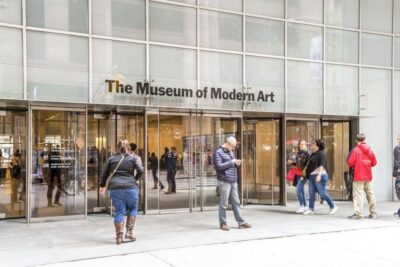 ★ 4.6Museum of Modern Art (MoMA) Entry TicketTickets from $3012,540 traveller reviews
 ★ 4.7One World Observatory Skip-the-Line TicketTickets from $3012,329 traveller reviews
 ★ 4.7New York CityPASS®: Save up to 41% at 5 Top AttractionsTickets from $15410,548 traveller reviews
More useful New York routes