
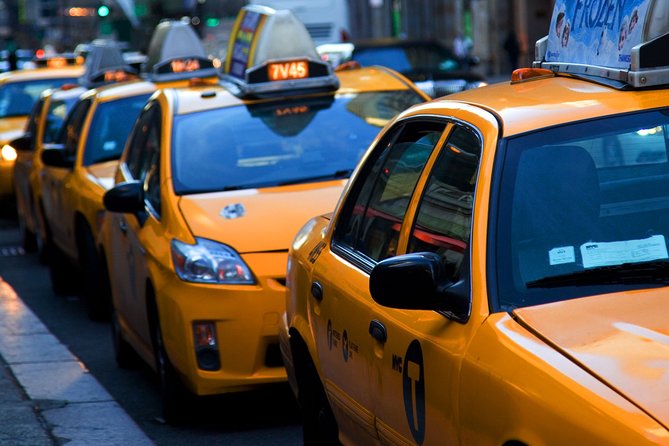
Review · NEW YORK CITY TOURS
3 Hour NYC Photography Workshop
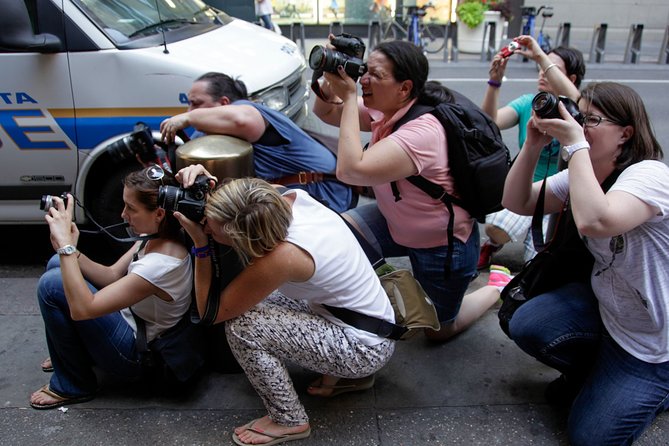
Your camera finally feels under control. This 3-hour Midtown photo workshop pairs hands-on practice with a pro photographer, right near Grand Central. You’ll walk through iconic streets and learn how to use your digital camera better, not just press the shutter and hope.
Two things I really like about this experience are the small group size (max 8) and the way the focus stays practical. You get instruction aimed at angles, locations, and composition while you’re actually out shooting around Manhattan. One consideration: the tour needs good weather and you will be walking through busy areas, so plan for crowds around Times Square.
Key things to know before you go
- Max 8 people means more chances for quick, personalized coaching
- Pro photographer instruction focuses on digital camera features and better composition
- Midtown photo stops include Times Square, Bryant Park, the New York Public Library, and the Chrysler Building
- Ends where you start at Pershing Square, so you can keep the rest of your day flexible
- English-speaking group with a mobile ticket for easier entry
A Midtown Photo Walk That Actually Teaches
This isn’t a sit-and-watch class. It’s built like a real photo session, with you moving through Manhattan while someone helps you make better choices. Think of it as training wheels for your camera in some of the most photographable places in the city.
You’ll get hands-on instruction on how to take advantage of digital camera features and functions. And you’ll also work on best angles and composition while you’re at real-world locations, not imaginary ones.
The schedule is short at about 3 hours, so you’ll want to show up ready to shoot right away. If you’re hoping for a slow, leisurely stroll with long breaks, this format may feel a bit quick. But if you want feedback fast, it’s a smart length.
You can also read our reviews of more photography tours in New York City
Price and Logistics: Is $125 Worth It?
At $125 per person for roughly 3 hours, you’re paying for two main things: time with a pro and a guided route through high-value photo locations. Since the group tops out at 8 travelers, the cost is easier to justify than a big, crowded tour where you get little attention.
Also, this is booked about 78 days in advance on average, which hints it’s a popular time slot. If your schedule is tight, you’ll likely want to lock it sooner rather than later.
You meet at Pershing Square (90 E 42nd St, New York, NY 10017) and the tour ends back at the same meeting point. That round-trip design is convenient because you don’t have to plan a separate way home or across-town transit after you finish shooting.
Before You Start: How to Get the Most From the Pro
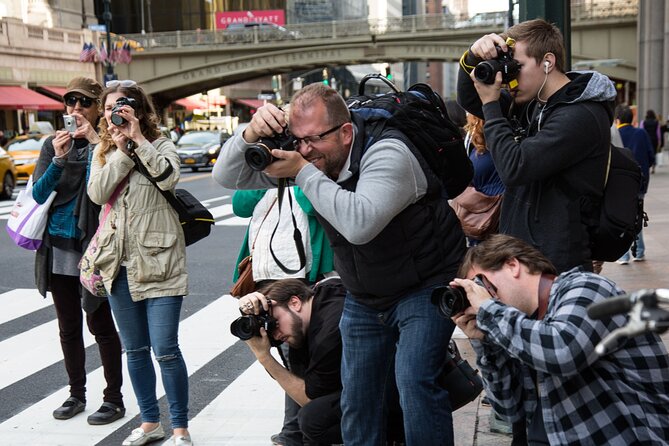
You’re going to be learning how to use your digital camera better, so it helps to come prepared. Bring the camera you’ll actually use during the workshop, plus any strap or method you’re comfortable with for quick shooting.
If you use a phone camera, you’ll still benefit from the composition and angle coaching, but the workshop is described as focused on digital cameras features and functions. So check that your gear matches what you want to learn, and be ready to follow along with the controls you have.
A key value here is that the instruction is tied to what you’re shooting in real time. That means your learning sticks because you practice immediately at the next stop.
Times Square and Theater District: Learning Angles in Real City Chaos
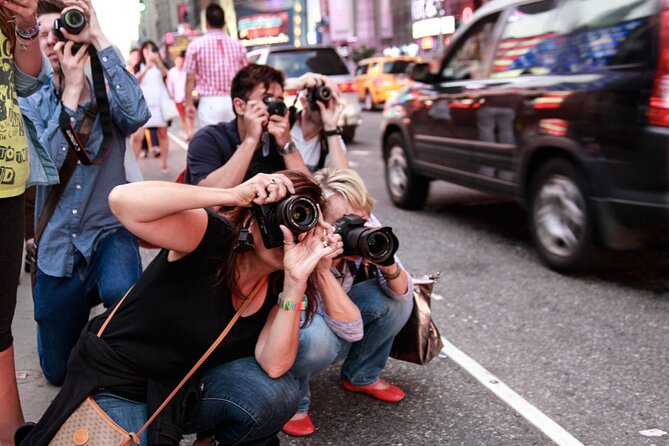
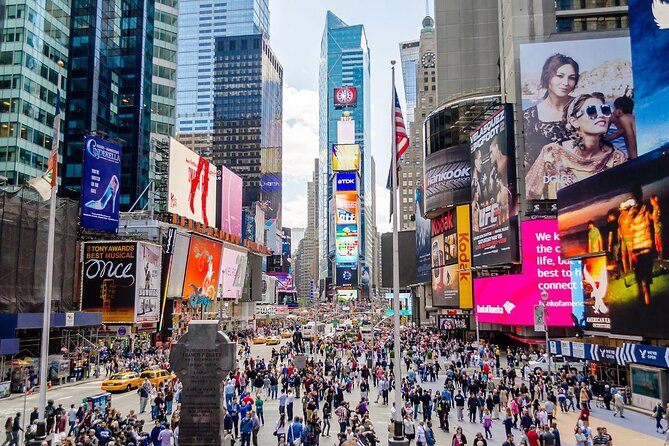
The workshop starts in the Times Square / Theater District area. This is a smart first stop because Times Square forces you to make decisions quickly: where to stand, what to include, and how to frame a scene with a lot happening.
You’ll likely work on choosing angles that make the image feel intentional rather than random. And since the tour later returns to Times Square again, you’ll get at least two chances to adjust your approach based on what you captured the first time around.
One practical note: Times Square is crowded. That’s not a deal breaker, but it means you may need to be patient for your shot and ready to work with shifting crowds. The benefit is you learn how to compose in messy conditions, which is a real skill in NYC photography.
Another Times Square Pass: Turning Practice Into Better Shots
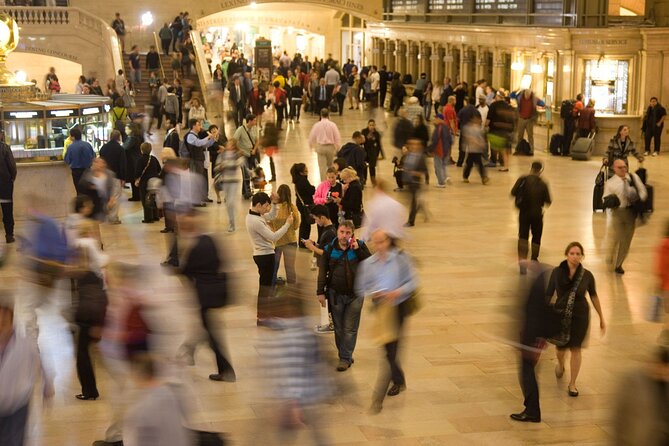
There’s a second Times Square stop after the initial Times Square / Theater District segment. This matters because photography improves through repetition, and two rounds in the same zone let you test ideas fast.
When you get feedback in the moment, you can change your angle, adjust what you emphasize, or simplify the frame. And when you’re back in a similar setting, you can compare what worked and what didn’t without walking halfway across Manhattan.
This is also where you can focus on photographing different subjects. Past participants highlighted that they got chances to take pictures of people, objects, scenery, and buildings using the techniques they learned. Times Square is exactly the kind of place where all those categories show up instantly.
More NYC tours and experiences for the shortlist

Bryant Park: A More Manageable Frame for Composition
Next up is Bryant Park. Compared with Times Square, Bryant Park is often easier to work with visually because the scene can feel more structured, especially when you’re looking for clean lines and layered depth.
This is a good moment to slow down just a little and focus on composition choices. You can practice deciding what the subject is, then build a frame around it. A quieter park setting also helps you concentrate on how light and angles affect your result, rather than just reacting to the loudest thing in view.
If you’re carrying your camera gear, Bryant Park is also a practical break point. Even if you don’t stop for long, you’ll likely have a brief window to check settings, wipe a lens if needed, and get your next shot planned.
New York Public Library: Front Facade Photos With Real Structure
The route continues to the New York Public Library area. The library is famous for its architecture, and that makes it a great place to practice framing. Instead of trying to swallow the whole building at once, you can learn how to compose using portions and perspective.
This is where angles matter a lot. Small changes in where you stand can dramatically alter how columns, steps, and the facade lines up in your frame. That’s exactly the kind of feedback a pro instructor can give you while you’re on location.
If you’re the type who struggles with city landmark shots, this stop helps because it’s structured. You can make the image feel balanced even when the surrounding streets are busy.
Chrysler Building: Getting the Icon Shot Without Guessing
The tour finishes its main stops at the Chrysler Building. This is a favorite subject for photographers for one big reason: it’s designed to photograph. The building has a recognizable form, and it rewards people who pay attention to how they frame the top and the details.
With guidance, you can focus on how to aim for a shot that looks intentional instead of just tall. You’ll be practicing angles and composition again, but now with a landmark that can easily overwhelm a frame if you’re not careful.
Past participants specifically called out that they learned techniques and used them to capture buildings. So if your goal is to leave with a few keeper architecture images, this stop is a strong target.
What You Actually Learn: Digital Camera Functions Plus Real Composition
The workshop teaches you how to better use digital camera features and functions. That sounds broad, but in practice it usually means you’ll learn how to make your camera work for you instead of fighting it. You’re not just wandering. You’re shooting with purpose.
You’ll also get hands-on help with best angles, locations, and composition. The location part matters because NYC is full of great sights, but the best view is often the one you did not automatically think to try. A pro can point you to a position where your frame looks stronger.
One review praised a photographer described as personable and professional, and said the instruction included many techniques. Another review in German also said there was no minute of boredom and that tips were explained well by a photographer known as Zim. That combination tells me the teaching style is a real part of the value, not just the sights.
Small Group Energy: Why Max 8 People Matters
A maximum of 8 travelers changes the whole feel of a photo tour. Instead of waiting your turn, you can ask questions and get quick feedback. And if you’re unsure about a setting or how to frame a shot, you’re less likely to be ignored in a group where everyone is competing for attention.
Personal attention also helps you shoot in different directions. Some people want buildings. Others want people or street details. The tour route covers all those categories across the Midtown highlights, so the small group setup makes it easier to tailor your practice.
The group format also works well for beginners who feel self-conscious. When you’re not in a huge crowd, it’s easier to ask a basic question without feeling like you’re slowing everyone down.
What to Bring and How to Prep
Wear shoes that can handle city sidewalks for several hours. The tour requires a moderate physical fitness level, so plan for walking between stops.
Bring your camera and any basic accessories you use regularly. If you have a phone and a camera, decide which one you want to rely on for the lessons, since the instruction is framed around digital camera functions.
Also, bring a lens cloth or something similar if you can. In Midtown, you can get haze, smudges, or dust depending on weather and crowds, and quick cleaning is often the difference between a sharp shot and a disappointing one.
Finally, be ready for the weather. This experience requires good weather, so you should check the forecast the day before.
Weather, Crowds, and Timing: The Midtown Reality Check
This tour needs good weather. If it gets canceled due to poor conditions, you’ll be offered a different date or a full refund. That’s helpful because photo results depend on light and visibility.
Times Square in particular is crowd-heavy, and that can affect when you get your best angles. The positive spin is that you’re practicing real NYC conditions, not a quiet version of the city.
Because the tour is about 3 hours, you should treat it like a focused shooting session. Don’t schedule something complicated immediately before it, and leave a bit of breathing room after.
Who This Workshop Is Best For
This works great if you want to learn practical NYC photography without spending a whole day in a classroom. It’s especially good for people who already own a digital camera but want guidance on using it better.
It’s also a smart pick if you’re traveling solo or as a couple and want structured time with a pro. The max of 8 people keeps it social, but still manageable.
If you have low interest in architecture or landmark shooting, you might feel less excited about stops like the New York Public Library and the Chrysler Building. But the workshop includes chances to shoot different subjects, including people and objects, so there is room for variety.
Should You Book This 3-Hour NYC Photography Workshop?
If you want a focused way to improve your camera skills fast, I think this is a strong deal at $125. The combination of a pro instructor, a small group, and high-value Midtown stops gives you a lot of practice in a short time.
Book it if you like learning by doing and you want direct help with angles and composition. Skip it only if you hate walking through busy areas or you’re not comfortable with a weather-dependent outdoor experience.
If your goal is to leave Midtown with better shots and more confidence using your digital camera, this workshop is built for that exact outcome.
FAQ
How long is the NYC photography workshop?
It runs for about 3 hours.
How much does it cost?
The price is $125.00 per person.
Where do I meet for the workshop?
You meet at Pershing Square, 90 E 42nd St, New York, NY 10017.
How many people are in the group?
The tour has a maximum of 8 travelers.
What’s included in the price?
A professional photographer instructor is included.
What language is the workshop offered in?
The workshop is offered in English.
Does the tour run only in good weather?
Yes, it requires good weather. If it’s canceled due to poor weather, you’ll be offered a different date or a full refund.
Can I get a full refund if I cancel?
Yes. You can cancel for a full refund up to 24 hours in advance of the experience start time.
More Workshops & Classes in New York City
More Photography Tours in New York City
More Tour Reviews in New York City

Not for you? Here's more nearby things to do in New York City we have reviewed




More New York City Tours to consider.
 ★ 4.7SUMMIT One Vanderbilt TicketsTickets from $4751,195 traveller reviews
 ★ 4.7Empire State Building Tickets – Observatory & MuseumTickets from $4725,757 traveller reviews
 ★ 4.6Statue of Liberty & Ellis Island with FerryTickets from $1918,683 traveller reviews
 ★ 4.5American Museum of Natural History TicketTickets from $3715,447 traveller reviews
 ★ 5.0New York in One Day Guided Sightseeing TourTickets from $9913,166 traveller reviews
 ★ 4.6Museum of Modern Art (MoMA) Entry TicketTickets from $3012,540 traveller reviews
 ★ 4.7One World Observatory Skip-the-Line TicketTickets from $3012,329 traveller reviews
 ★ 4.7New York CityPASS®: Save up to 41% at 5 Top AttractionsTickets from $15410,548 traveller reviews
More useful New York routes